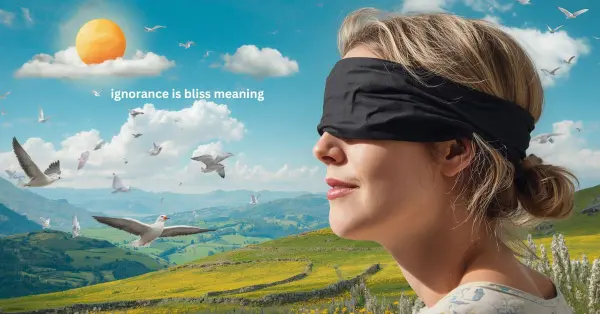
Sometimes, knowing less can make life feel easier. That simple idea explains the ignorance is bliss meaning. The phrase suggests that a person may feel happier or less worried when they do not know about a problem, unpleasant truth, or stressful situation.
You may hear this expression in everyday conversations, books, movies, social media posts, or text messages. Someone might say “ignorance is bliss” after discovering something they wish they had never known.
But the phrase does not always praise ignorance. Often, people use it in a humorous or ironic way. It can describe the peace that comes from not knowing something, while also hinting that knowledge may matter.
In this guide, we will explain the phrase in simple English, look at its history, show how people use it in texting and conversation, and give clear examples.
What Does Ignorance Is Bliss Mean?
“Ignorance is bliss” means that not knowing about something can sometimes make a person happier, calmer, or less worried.
Here, ignorance means a lack of knowledge or awareness. Bliss means great happiness or peace.
Put the two ideas together, and the phrase means:
Sometimes, knowing less can help you avoid worry.
For example, imagine your friend tells you that a movie has a surprise ending. You keep thinking about it and enjoy the movie less.
You might say:
“I wish you hadn’t told me. Ignorance is bliss!”
You are joking that you would have been happier without that information.
The phrase does not mean that ignorance is always good. It usually describes a situation where knowledge creates stress, worry, disappointment, or discomfort.
Ignorance Is Bliss in Simple Words
In very simple words, ignorance is bliss means “sometimes, not knowing is better.”
Consider this example:
You are waiting for a test result. You could search online for every possible outcome and worry all night. Or, you could wait until you receive the actual result.
If searching gives you more fear without helping you take action, you might jokingly think:
“Maybe ignorance is bliss.”
The expression focuses on the emotional effect of knowledge.
Knowing something can help you make better choices. But knowing something unpleasant can also make you worried.
That contrast is the heart of the phrase.
What Does “Bliss” Mean in Ignorance Is Bliss?
The word bliss means a state of great happiness, peace, or pleasure.
It is stronger than simply saying “happy.”
For example:
- Happy = feeling good
- Peaceful = feeling calm
- Blissful = feeling deeply happy and content
So, when someone says “ignorance is bliss,” they suggest that not knowing something may protect their peace of mind.
The phrase is often used casually. People may say it after learning information that they wish they had never discovered.
Is Ignorance Is Bliss a Good or Bad Thing?
The phrase itself is neither completely positive nor completely negative.
Its meaning depends on the situation.
Sometimes, not knowing can protect someone from unnecessary stress. For example, you may not need to know every small detail about a problem that someone else is already handling.
In other situations, ignorance can cause harm. Important information can help people make safe and informed decisions.
That is why “ignorance is bliss” often carries a slightly ironic tone.
A person may admit that not knowing feels better while also recognizing that knowledge has value.
Example
“I never checked how much the repair cost. Ignorance is bliss.”
The speaker is probably joking. They know the information exists, but they prefer not to think about it.
Ignorance Is Bliss Meaning in Texting
In texting, “ignorance is bliss” usually has the same meaning as in everyday speech.
People often use it after learning something unpleasant, awkward, surprising, or stressful.
Text Example 1
Friend: “Did you know your favorite restaurant changed its recipe?”
You: “No! Why did you tell me? Ignorance is bliss 😂”
Here, the phrase is humorous.
Text Example 2
Friend: “I checked the price of the vacation.”
You: “Don’t tell me. Ignorance is bliss.”
The speaker would rather avoid information that could cause stress.
Text Example 3
Friend: “I looked at the comments on your post.”
You: “I should’ve stayed away. Ignorance is bliss.”
The person wishes they had not seen something upsetting.
Ignorance Is Bliss Meaning on Social Media
On social media, people often use “ignorance is bliss” as a short caption or reaction.
The phrase can fit situations involving:
- Bad news
- Relationship drama
- Spoilers
- Money
- Online comments
- Work problems
- Celebrity gossip
- Awkward discoveries
- Unwanted information
For example:
“I opened the comments and immediately regretted it. Ignorance is bliss.”
Someone may also use the phrase as a funny caption:
“Me before checking my bank account: ignorance is bliss.”
The humor comes from pretending that not checking the account feels better than knowing the balance.
Ignorance Is Bliss Examples in Everyday Life
Here are some natural examples.
Example 1:
“I didn’t know my friends were planning a surprise, and honestly, ignorance was bliss.”
Example 2:
“Don’t tell me what happens in the next episode. Ignorance is bliss.”
Example 3:
“I never asked how much my parents spent on the wedding. Ignorance is bliss.”
Example 4:
“She didn’t know about the office drama, so she stayed happy. Ignorance is bliss.”
Example 5:
“I checked my old messages and found something embarrassing. Ignorance was bliss.”
Example 6:
“I don’t want to know how many calories are in this dessert. Ignorance is bliss.”
These examples show how flexible the phrase can be.
Is Ignorance Is Bliss an Idiom?
Yes. “Ignorance is bliss” is commonly treated as an idiomatic expression.
Its meaning goes beyond the literal definitions of its individual words.
Literally, it says that ignorance equals bliss. But in normal conversation, people use it to express the idea that not knowing something unpleasant may make life easier or more peaceful.
It can be serious, humorous, sarcastic, or ironic depending on the speaker and situation.
Origin of “Ignorance Is Bliss”
The expression is strongly associated with the English poet Thomas Gray.
Gray used the line “Where ignorance is bliss, ’tis folly to be wise” in his 1747 poem Ode on a Distant Prospect of Eton College.
The idea behind the line is that greater knowledge can sometimes bring greater awareness of life’s problems.
The modern expression “ignorance is bliss” became a shorter and widely used form of this idea.
It is important to understand the original wording. Gray was not simply saying that people should never seek knowledge. The poem reflects on innocence, youth, and the painful realities that greater awareness can reveal.
Ignorance Is Bliss vs. Knowledge Is Power
These two ideas create an interesting contrast.
“Ignorance is bliss” suggests that not knowing can sometimes bring peace.
“Knowledge is power” suggests that information gives people the ability to understand situations and make informed choices.
Neither expression works as a universal rule.
For example, knowing about a serious problem may be stressful, but that knowledge can help you solve it.
On the other hand, learning every small detail about something outside your control may only increase anxiety.
The better choice depends on the situation.
When Should You Use “Ignorance Is Bliss”?
Use “ignorance is bliss” when you want to say that knowing less about something would make you feel more comfortable or happy.
It works especially well in casual conversations.
You can use it when:
- Someone tells you an unwanted fact.
- You discover something unpleasant.
- A friend gives you a spoiler.
- You see information that makes you worried.
- You want to make a joke about avoiding bad news.
Natural sentence
“Don’t tell me the ending. Ignorance is bliss.”
This sounds natural because the speaker prefers not to know the spoiler.
When Should You Not Use It?
The phrase may not fit serious situations where people genuinely need important information.
For example, if someone needs safety instructions, medical information, financial facts, or other important details, saying “ignorance is bliss” may sound careless.
It is usually better to treat important information seriously.
The phrase works best when the lack of knowledge is harmless or when the speaker is making a casual observation or joke.
Is “Ignorance Is Bliss” Sarcastic?
It can be sarcastic, but it does not have to be.
For example:
“I didn’t check my work email all weekend. Ignorance is bliss.”
This could be a humorous comment.
But someone might also use it sincerely:
“I didn’t know about the argument, and I was happier because of it. Ignorance was bliss.”
The tone depends on context.
Synonyms for Ignorance Is Bliss
There is no perfect one-to-one synonym, but several phrases express a similar idea:
- Sometimes less is more.
- What you don’t know can’t hurt you.
- Not knowing can be peaceful.
- Better not to know.
- Blissful ignorance.
- Sometimes ignorance feels easier.
- Some things are better left unknown.
These expressions can have different meanings, so they should not always be treated as exact replacements.
Common Questions About Ignorance Is Bliss
What is the basic ignorance is bliss meaning?
It means that not knowing something unpleasant can sometimes make a person happier, calmer, or less worried.
Is ignorance is bliss a positive phrase?
It can be positive, negative, humorous, or ironic. The meaning depends on the situation and the speaker’s tone.
What does ignorance mean?
Ignorance means a lack of knowledge or awareness about something. It does not automatically mean that someone is unintelligent.
What does bliss mean?
Bliss means a state of great happiness, peace, or pleasure.
Who said “ignorance is bliss”?
The expression is strongly associated with English poet Thomas Gray. His 1747 poem Ode on a Distant Prospect of Eton College contains the line, “Where ignorance is bliss, ’tis folly to be wise.”
What is an example of ignorance is bliss?
If someone avoids reading negative comments online because they know the comments will upset them, they might say, “Ignorance is bliss.”
Is ignorance is bliss still commonly used?
Yes. The expression remains familiar in modern English and appears in everyday conversation, writing, social media, movies, and online discussions.
Final Thoughts on Ignorance Is Bliss Meaning
The ignorance is bliss meaning is simple: sometimes, not knowing something can make life feel easier, calmer, or happier.
The phrase does not claim that ignorance is always better than knowledge. Instead, it describes a common human experience. Some information helps us solve problems, while other information may only create worry or discomfort.
That is why people often use the expression humorously. A spoiler, awkward discovery, expensive bill, or unpleasant comment can make someone wish they had never found out.
The phrase has a long history and is closely linked with Thomas Gray’s 1747 poem. Today, people still use it in texts, conversations, captions, and everyday English.
When someone says “ignorance is bliss,” they are often saying one simple thing:
“Sometimes, I was happier before I knew.”

Tennessee Williams was an iconic American playwright, famous for emotional dramas like A Streetcar Named Desire, influencing modern theatre worldwide short bio crafted by punsora.com for readers seeking quick literary insight.