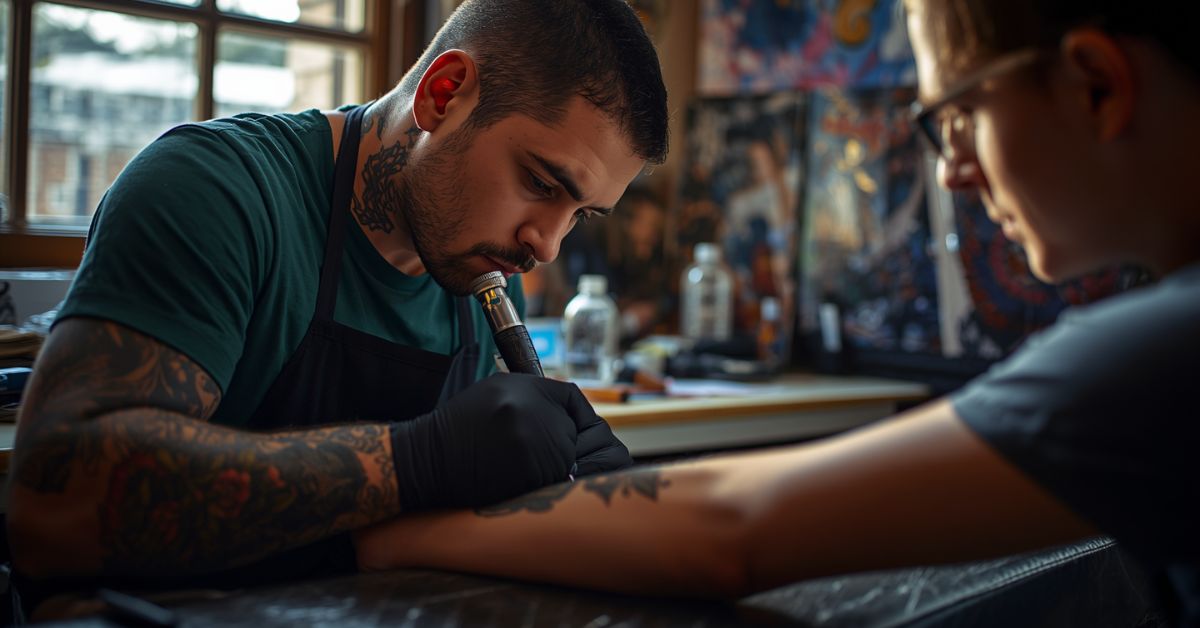
Every tattoo you’ve ever admired started the same way: as a rough sketch, in the hands of someone who had no idea what they were doing yet. Becoming a tattoo artist isn’t something you can shortcut with a cheap machine and a YouTube tutorial; it’s a craft built on years of drawing practice, an unglamorous apprenticeship, and a genuine respect for skin, sanitation, and the people who trust you to mark them permanently.
If you’re serious about this path, the good news is that it’s more accessible than most people think but it does demand discipline most people underestimate. There’s no single “right” way in, but there is a proven sequence that separates artists who last from those who burn out (or worse, hurt someone) in year one.
This guide walks through exactly what that sequence looks like, step by step.
Is Tattooing Right for You?
Before you invest years into this craft, it’s worth being honest about whether it actually fits who you are, not just who you want to be. Tattooing looks glamorous from the outside: creative freedom, flexible hours, art as a career. The reality is more demanding.
First, the technical foundation: you need genuine drawing and illustration skills. Not “I doodle sometimes” the ability to sketch confidently, understand line weight, shading, proportion, and composition well enough to translate someone else’s idea onto a curved, moving, living surface. If you can’t draw well on paper, you won’t tattoo well on skin.
Second, physical steadiness matters. Tattooing demands hours of controlled, precise hand movement sessions can run four, six, even eight hours at a stretch. A shaky hand or low physical stamina will show up in the linework.
Third, and often overlooked: this is a people business. You’ll spend your days talking to nervous first-timers, negotiating design changes, and managing client expectations sometimes mid-session, needle in hand. Patience, clear communication, and a thick skin for criticism aren’t optional extras; they’re core job requirements.
Finally, ask yourself about resilience. Apprenticeships are long, often unpaid or low-paid, and involve plenty of grunt work before you touch a machine. If you’re chasing fast money or instant creative validation, this career will frustrate you before it rewards you.
Build a Strong Art Foundation
Your machine will only ever be as good as the hand holding it and that hand needs years of drawing behind it before it ever touches skin. This is the stage most aspiring artists want to rush past, and it’s exactly why so many never make it past their first year in a shop.
Start with the fundamentals: line work, shading, proportion, anatomy, and composition. Daily sketching isn’t optional, it’s the single habit that separates artists who improve fast from those who plateau. Whether you learn through formal art school, community college courses, or disciplined self-teaching, what matters is consistent practice, not the credential.
Next, deliberately explore different tattoo styles: traditional/American, realism, fine line, blackwork, Japanese irezumi, watercolor, and more. You don’t need to master all of them, but understanding how each style handles line, shading, and color will make you a more versatile artist and help you discover your own visual voice.
Before you approach any shop, build a portfolio even if it only exists on paper or Instagram. This should showcase range (multiple styles), technical control (clean lines, consistent shading), and original ideas, not copied reference work. Shops and mentors evaluate potential apprentices almost entirely on this portfolio, so treat it as your resume.
This groundwork can take one to several years. That’s normal, it’s the investment that makes everything after it possible.
Understand Licensing & Legal Requirements
Talent alone won’t make you legally allowed to tattoo that requires clearing a set of regulatory hurdles that vary significantly depending on where you live and work. Skipping this step isn’t just risky; in most places, it’s illegal.
The specifics differ by country, and even by state or province within the same country, but a few requirements show up almost everywhere. Most jurisdictions require a bloodborne pathogens certification, which teaches you how to handle blood exposure risks, prevent cross-contamination, and follow universal precautions. This is usually a short course you can complete online or in person. Many places also require a tattoo-specific health or sanitation permit, sometimes tied to the individual artist and sometimes to the shop itself.
Age requirements are another near-universal rule; most regions require artists (and clients) to be at least 18, though some allow younger apprentices under supervision. Beyond that, some areas require a formal apprenticeship to be registered or documented, while others regulate shops more than individual artists.
Because these rules change by location and update periodically, don’t rely on general guides (including this one) as your final source. Check with your local health department, licensing board, or state/provincial regulatory body before you begin practicing on real clients even under supervision.
Getting licensing right early saves you from fines, shop rejections, or having to redo your apprenticeship under the radar.
Find an Apprenticeship
An apprenticeship is the single most important step in becoming a tattoo artist and in most cases, it’s non-negotiable. It’s how nearly every respected artist learned the craft, and it’s what separates trained professionals from people who bought a machine online and started practicing on strangers.
Start by researching shops in your area with a reputation for quality work and professionalism, not just the ones closest to home. Visit in person when you can, get a feel for the shop’s culture, and study the work of artists who might mentor you. When you approach a shop, come prepared with a polished portfolio and a genuine, specific reason you want to learn from them.
A typical apprenticeship usually starts with unglamorous work: cleaning stations, sterilizing equipment, observing sessions, and studying sanitation protocols for months before you touch a machine. From there, you’ll practice on synthetic skin, then move to supervised tattoos on real clients, often friends or family first. Apprenticeships commonly run one to three years, and many are unpaid or low-paid, which is standard in this industry.
Watch for red flags: shops that want money upfront for “training,” mentors unwilling to show credentials or discuss sanitation practices, or anyone offering to skip you straight to tattooing clients. A legitimate apprenticeship is rigorous and slow by design; that’s a sign it’s working, not a reason to look elsewhere.
Learn the Technical Craft
Once you’re inside an apprenticeship, the real technical education begins and this is where drawing skill meets machine, needle, and skin for the first time.
Start with your equipment. You’ll learn the differences between coil and rotary machines, needle groupings (liners, shaders, magnums) and what each is used for, and how ink behaves differently across brands, skin tones, and body placements. Understanding your tools isn’t optional theory: machine voltage, needle depth, and hand speed directly determine whether a line heals crisp or blows out.
Sanitation deserves its own spotlight here, because it’s non-negotiable. You’ll learn proper sterilization of equipment, single-use needle and tube protocols, glove and surface hygiene, and how to set up a station that meets health code every single time, not just when someone’s watching. Mistakes here don’t just fail inspections; they can seriously harm clients.
Technical practice follows a deliberate progression: first on synthetic practice skin, where you build muscle memory for line consistency, shading pressure, and machine control without real consequences. Only after your mentor is confident in your control do you move to supervised sessions on real skin, usually starting with small, simple designs on willing friends or family before working with paying clients.
This stage can’t be rushed. Skin doesn’t forgive mistakes the way fake skin does, and the artists who skip steps here are the ones who end up doing costly, painful cover-up work later.
Build Your Portfolio & Personal Brand
Once you start tattooing real clients, your portfolio shifts from a hiring tool into your most valuable long-term marketing asset and in a visual, word-of-mouth-driven industry, how you present your work matters almost as much as the work itself.
Start documenting everything from day one. Photograph every piece in good, consistent lighting ideally right after the session and again once healed, since healed photos build trust with future clients far more than fresh ink does. Organize your work by style so potential clients can quickly see what you’re capable of in the style they want.
Social media, especially Instagram, has become the de facto portfolio for most tattoo artists today. Treat your profile like a storefront: consistent posting, quality photography, clear captions about style and placement, and engagement with your local tattoo community. Many clients now find and vet artists entirely through social proof before ever stepping into a shop.
As you tattoo more, pay attention to what you gravitate toward and what clients keep requesting from you. Developing a signature style and a distinct approach to linework, color, or subject matter is what eventually turns “a tattoo artist” into “the artist known for that specific look.” That reputation is what drives bookings, referrals, and pricing power later on.
Your brand isn’t built overnight, but every piece you document and share is compounding toward it.
Get Your First Job / Go Independent
Finishing your apprenticeship doesn’t mean you’re done building your career, it means you’re ready to start making strategic choices about how and where you work.
Most new artists begin by staying on at the shop where they trained, or applying to other shops as a hired artist, often on commission (typically 40–60% of what clients pay, with the shop taking the rest for space, supplies, and reputation). This path gives you steady walk-in traffic, an established clientele to tap into, and the support of experienced artists around you valuable safety nets in your first few years.
Another common route is guest spotting: booking short-term stints at shops in other cities or countries. This builds your reputation beyond your local market, exposes you to different client bases and styles, and helps you decide where you might eventually want to settle or open your own space.
Eventually, many artists move toward independence, renting a private studio or opening their own shop. This offers more creative control and a larger cut of your earnings, but it also means taking on business responsibilities: marketing, bookkeeping, licensing, and managing your own client pipeline.
Whichever path you start with, be deliberate about pricing as a beginner. Charging fairly for your skill level underpricing devalues your work and attracts clients who won’t respect your time, while overpricing too early can stall your booking momentum before you’ve built a following.
Common Mistakes to Avoid
Even talented artists can derail their careers early by cutting corners that seem harmless in the moment. Knowing these pitfalls in advance can save you years of setbacks or worse.
The most common mistake is skipping the apprenticeship entirely. Buying a machine online and practicing directly on paying clients (or even willing friends) without proper training might feel like a faster start, but it almost always produces sloppy, uneven work, and it skips the sanitation and safety education that protects both you and your clients. Shops rarely hire artists who took this shortcut, since the gaps in fundamentals tend to show immediately.
Ignoring sanitation protocols is another serious error not just a technical oversight, but a legal and ethical one. Bloodborne pathogens, cross-contamination, and improper sterilization can cause real harm, and violations can end a career before it starts, regardless of artistic talent.
Rushing your art foundation is a quieter but equally damaging mistake. Artists who move to skin before their linework, shading, and composition are solid on paper tend to plateau early, since bad habits formed under pressure are harder to unlearn later.
Finally, watch out for underpricing out of insecurity, and for neglecting your portfolio and online presence once you’re busy tattooing. Both are easy to deprioritize day-to-day, but both quietly limit how far your career can grow.
Avoiding these mistakes isn’t about perfection, it’s about respecting the process enough not to shortcut the parts that matter most.
FAQ
How long does it take to become a tattoo artist?
Most people spend one to several years building their art foundation before even starting an apprenticeship, which itself typically runs one to three years. All in, expect a realistic timeline of three to five years from complete beginner to confident, independent artist though talented, disciplined learners sometimes move faster.
Do you need to go to art school?
No, but you need equivalent skill. Art school provides structure, feedback, and formal training in fundamentals like anatomy, composition, and color theory, which can accelerate your progress. Many successful tattoo artists are self-taught, however, through disciplined daily practice, online courses, and studying other artists’ work. What matters to shops and mentors is the quality of your portfolio, not how you got there.
How much do tattoo artists make starting out?
Earnings vary widely by location, shop commission structure, and demand for your style. Apprentices often earn little to nothing during training, since it’s treated as paid education. Once working independently at a shop, beginners typically earn modestly while building a client base, with income growing significantly as your portfolio, reputation, and repeat clientele expand. Established artists with strong followings can earn substantially more, especially if they move toward guest spots or independent studios.
Do I need a license to tattoo?
In most places, yes. Requirements vary by region but often include bloodborne pathogens certification and a local health permit always confirmed with your local regulatory body.
Conclusion
Becoming a tattoo artist isn’t a shortcut career, and it was never meant to be one. It’s a craft built layer by layer of years of drawing before you ever pick up a machine, a slow and often humbling apprenticeship, and a genuine respect for sanitation and safety that never becomes optional, no matter how experienced you get. Every artist whose work you admire went through this same unglamorous process, even if their social media only shows the finished pieces.
If there’s one thing to take from this guide, it’s that patience isn’t the enemy of a tattoo career, it’s the foundation of it. Rushing past your art fundamentals, skipping a real apprenticeship, or cutting corners on licensing and hygiene doesn’t get you to a successful career faster; it just gets you there with more damage to undo. The artists who last are the ones who let each stage do its job before moving to the next.
If you’re serious about this path, start today with what’s actually in your control: pick up a sketchbook, draw daily, and start studying the styles and artists that inspire you. That habit, more than any shortcut, is what will eventually get a shop to say yes.
Your first tattoo machine will feel earned when it finally arrives and that’s exactly how it should feel.