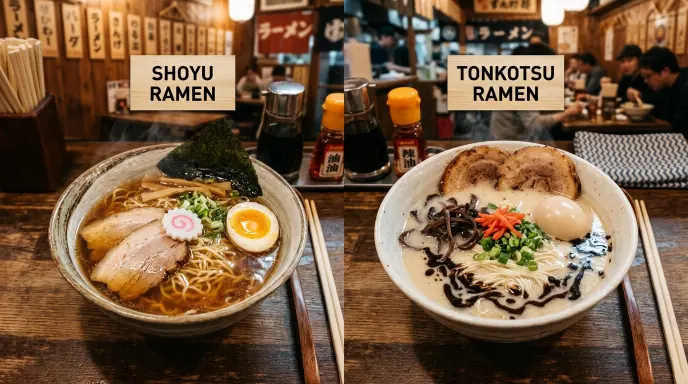
Shoyu vs tonkotsu mainly comes down to what each term describes. Shoyu refers to a soy-sauce-based seasoning used in ramen, while tonkotsu refers to a rich broth made by boiling pork bones. Shoyu ramen is typically clear, savory, and lighter-bodied, while tonkotsu ramen is cloudy, creamy, pork-rich, and fuller in texture. The two can also be combined in one bowl.
Key Takeaways
- Shoyu means soy sauce and generally describes the ramen’s seasoning or tare.
- Tonkotsu means pork bones and describes the broth base.
- Shoyu ramen is usually clearer, more aromatic, and lighter in body.
- Tonkotsu ramen is usually cloudy, creamy, rich, and pork-forward.
- A bowl can be both tonkotsu and shoyu, because the pork-bone broth can be seasoned with soy sauce.
What Is the Difference Between Shoyu and Tonkotsu?
The biggest difference between shoyu and tonkotsu is that they technically describe different parts of a ramen bowl.
In Japanese ramen, the soup is commonly built from a broth or stock and a concentrated seasoning called tare. Shoyu is a type of tare made primarily with soy sauce. Tonkotsu, on the other hand, refers to a broth made from pork bones. Japan’s government explains that shoyu, shio, and miso classifications are associated with the main tare, while tonkotsu is associated with the pork-bone broth preparation.
That distinction is important because saying “shoyu is the opposite of tonkotsu” is not quite accurate.
A ramen shop can make a tonkotsu broth and season it with shoyu. That creates tonkotsu-shoyu ramen.
Shoyu describes the seasoning
“Shoyu” is the Japanese word for soy sauce. In ramen, shoyu is usually incorporated into a concentrated tare, which is then balanced with broth and other ingredients.
The soy sauce provides saltiness, color, aroma, and umami. The underlying stock may contain chicken, pork, seafood, vegetables, dashi, or a combination of ingredients.
Tonkotsu describes the broth
“Tonkotsu” literally refers to pork bones. The bones are boiled vigorously for an extended period, creating the characteristic opaque, pale broth associated with tonkotsu ramen.
The high-heat cooking process helps emulsify fat and other components from the pork bones into the liquid, producing a creamy-looking and full-bodied soup.
What Is Shoyu Ramen?
Shoyu ramen is ramen seasoned with a soy-sauce-based tare. It is one of the classic ramen styles and is commonly associated with clear or lightly cloudy broth, although the exact appearance varies by recipe.
The broth itself does not have to be made from soy sauce. Instead, the soy sauce is part of the seasoning that gives the finished soup its characteristic flavor.
A typical shoyu ramen may include chicken or pork stock along with ingredients such as dashi, kombu, dried fish, or other aromatics. Because recipes vary, two bowls labeled shoyu can taste noticeably different.
What Does Shoyu Ramen Taste Like?
Shoyu ramen is generally savory, salty, aromatic, and rich in umami. The soy sauce provides a recognizable fermented flavor without necessarily making the soup taste like straight soy sauce.
A well-balanced bowl can have subtle sweetness, seafood or chicken notes, aromatic oils, and a clean finish.
The broth is often amber or brown and tends to have a lighter mouthfeel than traditional tonkotsu.
Common toppings include:
- Chashu pork
- Menma, or bamboo shoots
- Nori
- Green onions
- Seasoned soft-boiled egg
- Narutomaki fish cake
Shoyu ramen is therefore a useful choice for someone who wants a strongly savory ramen flavor without the especially creamy texture associated with tonkotsu.
What Is Tonkotsu Ramen?
Tonkotsu ramen is built around pork-bone broth. The pork bones are cooked at high heat for many hours, allowing fat, collagen, marrow, and other components to become incorporated into the broth.
The result is usually a cloudy, opaque, pale-colored soup with a rich and silky mouthfeel. The white appearance does not mean milk or cream has been added; it is largely the result of the cooking process and emulsification.
Tonkotsu is strongly associated with Kyushu, particularly Fukuoka and Hakata-style ramen.
What Does Tonkotsu Ramen Taste Like?
Tonkotsu is typically deeply savory, rich, creamy, and pork-forward.
Compared with a clear shoyu broth, tonkotsu usually has a heavier mouthfeel. The soup can cling to the noodles and create a more substantial sensation with every bite.
Classic Hakata-style tonkotsu often uses thin, straight noodles. This combination works well with the concentrated broth and is part of the style’s familiar presentation.
Common toppings include:
- Chashu pork
- Green onions
- Kikurage mushrooms
- Sesame
- Pickled or spicy greens
- Soft-boiled egg
- Nori
Garlic, chili, or flavored oils may also be added depending on the restaurant.
Shoyu vs Tonkotsu: Side-by-Side Comparison
| Feature | Shoyu Ramen | Tonkotsu Ramen |
|---|---|---|
| Main defining element | Soy-sauce-based tare | Pork-bone broth |
| Typical color | Amber to brown | Cloudy white or ivory |
| Texture | Light to medium-bodied | Rich, creamy, full-bodied |
| Main flavor | Savory, soy-forward, umami | Deep, pork-rich, savory |
| Broth base | Chicken, pork, seafood, dashi, etc. | Pork bones |
| Common noodles | Thin to medium, often wavy | Often thin and straight |
| Common association | Tokyo-style ramen | Hakata/Fukuoka-style ramen |
| Typical toppings | Chashu, menma, nori, egg | Chashu, green onion, kikurage, egg |
| Can it contain the other? | Yes | Yes |
The exact ingredients are not fixed. Ramen varies significantly between regions, restaurants, and chefs, so the table describes common patterns rather than universal rules.
Flavor and Texture Differences
The easiest way to understand shoyu vs tonkotsu is to compare how they feel while eating.
Shoyu emphasizes the flavor of its seasoning. Soy sauce gives the soup a recognizable savory and umami character, while the underlying stock adds depth. The finished broth is commonly clear or lightly cloudy and relatively easy to drink.
Tonkotsu emphasizes the character of its pork-bone broth. Long, vigorous cooking produces a cloudy, emulsified soup with a silky, coating texture.
This does not mean shoyu is always “light” or tonkotsu is always extremely heavy. A chef can make a very concentrated shoyu ramen, while a tonkotsu bowl can be carefully balanced and surprisingly clean.
The restaurant’s recipe, tare concentration, aromatic oil, toppings, and portion size all influence the final experience.
Can Ramen Be Both Shoyu and Tonkotsu?
Yes.
This is one of the most important things to understand about the comparison.
A restaurant can use a tonkotsu pork-bone broth as the soup base and then season it with shoyu tare. The resulting ramen can be described as tonkotsu shoyu ramen.
This works because the two terms refer to different elements:
- Tonkotsu = the pork-bone broth
- Shoyu = the soy-sauce seasoning
In other words, you do not always have to choose between shoyu and tonkotsu. A menu may offer both together.
Which One Should You Order?
The choice depends mostly on the flavor and texture you want.
Choose shoyu ramen if you prefer:
- A clearer-looking broth
- Soy sauce and umami flavors
- A lighter or cleaner mouthfeel
- Aromatic, savory soup
- A classic style that lets the seasoning and stock remain distinct
Choose tonkotsu ramen if you prefer:
- A creamy-looking broth
- Rich pork flavor
- A thicker, silkier mouthfeel
- Deep savory flavors
- Thin, straight noodles commonly associated with Hakata-style ramen
There is no universal “better” choice. Your preference for richness, saltiness, pork flavor, broth texture, and noodle style is more useful than treating one as superior.
If you’re new to ramen, looking at the broth can also give you a quick clue. An amber, relatively clear soup is often shoyu, while an opaque, pale broth is often tonkotsu.
Shoyu vs Tonkotsu FAQs
Is shoyu ramen lighter than tonkotsu?
Generally, yes in terms of broth texture and mouthfeel. Shoyu ramen commonly uses a clear or lightly cloudy stock seasoned with soy sauce, while tonkotsu uses an emulsified pork-bone broth that is richer and creamier. However, “lighter” does not automatically mean lower in calories or sodium because recipes, oils, toppings, and portion sizes vary.
Is tonkotsu ramen always made with pork?
Traditional tonkotsu broth is made from pork bones; the word itself refers to pork bones. This is what distinguishes it from chicken, seafood, vegetable, or other ramen stocks. If avoiding pork is important, check the restaurant’s ingredients rather than assuming a ramen labeled simply by another seasoning is pork-free.
Is shoyu ramen vegetarian?
Not necessarily. Shoyu refers to soy-sauce seasoning, not a vegetarian broth. A shoyu ramen can use chicken, pork, seafood, or dashi containing fish. Some restaurants offer vegetarian or vegan shoyu ramen, but you should confirm the broth and toppings before ordering.
Is tonkotsu the same as tonkatsu?
No. Tonkotsu refers to pork-bone ramen broth. Tonkatsu is a separate Japanese dish consisting of a breaded and fried pork cutlet. The words sound similar, but they refer to different foods.
Can tonkotsu ramen taste like soy sauce?
Yes. Tonkotsu broth can be seasoned with shoyu tare. A bowl labeled tonkotsu shoyu combines the rich pork-bone base with the savory flavor of soy sauce. This is why tonkotsu and shoyu should not always be treated as mutually exclusive ramen categories.
The Bottom Line
The simplest explanation of shoyu vs tonkotsu is this: shoyu describes a soy-sauce-based seasoning, while tonkotsu describes a pork-bone broth. Shoyu ramen is commonly clearer, savory, and aromatic, whereas tonkotsu is usually cloudy, creamy, and rich.
Most importantly, the two can overlap. A ramen chef can combine tonkotsu broth with shoyu tare, creating a tonkotsu-shoyu bowl. Understanding that distinction makes Japanese ramen menus much easier to read and helps you choose a bowl based on the flavor and texture you actually want.