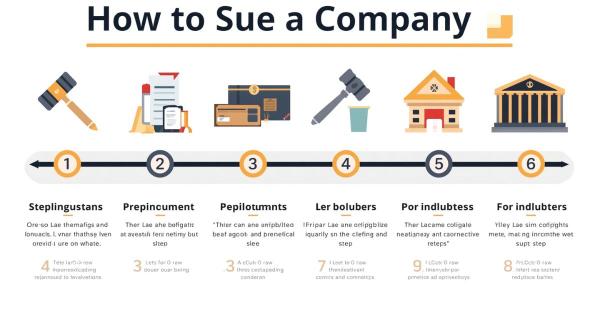
Dealing with a company that won’t make things right can be frustrating whether it’s a defective product, a broken contract, unpaid wages, or outright fraud. When phone calls and emails go nowhere, filing a lawsuit becomes a real option, and it’s more accessible than most people think. You don’t always need a lawyer or a mountain of money to hold a company accountable. Small claims court, demand letters, and even informal negotiation can resolve disputes without ever setting foot in a courtroom.
This guide walks you through the entire process of suing a company: figuring out if you have a valid claim, gathering the right evidence, choosing where to file, and understanding what happens once your case is in motion. Keep in mind that laws vary by state and situation, so this is meant as a general roadmap not a substitute for advice from a licensed attorney.
Before You Sue: Initial Considerations

Before rushing to file a lawsuit, take a step back and evaluate whether legal action is really your best option. Start by identifying the legal basis for your claim: is it a breach of contract, negligence, product liability, discrimination, or consumer fraud?
Next, honestly assess whether you have a valid claim. Not every bad experience with a company qualifies as grounds for a lawsuit. Ask yourself: did the company breach a legal duty or obligation, and did that breach cause you measurable harm? If the answer isn’t clear, this is a good time to consult a lawyer for a quick case evaluation.
Consider the practical side too. Litigation can be time-consuming, stressful, and expensive. Weigh the potential damages you could recover against the cost and effort of pursuing a case.
Check the statute of limitations for your claim type in your state, miss this deadline, and you lose your right to sue entirely. Also review any contracts you signed with the company; many include arbitration clauses or forum-selection clauses that require disputes to be resolved outside of traditional court.
Finally, try resolving the issue informally first. A well-documented complaint, escalation to customer service, or a formal demand letter often resolves disputes faster and cheaper than going to court.
Gathering Evidence
Strong evidence is the foundation of any successful lawsuit. Before you file, take time to collect and organize every document that supports your claim. The more thorough you are now, the stronger your case will be later.
Start with the paper trail: contracts, invoices, receipts, purchase orders, and any written agreements between you and the company. These establish the terms both parties agreed to and can prove a breach occurred. Next, gather all correspondence emails, text messages, chat logs, and letters, especially anything where the company acknowledges the issue, makes promises, or admits fault.
If your case involves a defective product, property damage, or physical harm, photos and videos are essential. Document the damage as soon as possible, and keep dated records showing the condition of the item or situation over time. If witnesses saw what happened or can speak to the company’s conduct, collect their names and contact information early, since memories fade and people can be hard to reach later.
Build a clear timeline of events, from your first interaction with the company to the point where things went wrong and any attempts you made to resolve it. This helps you (and eventually a judge) understand the sequence of events at a glance.
Finally, gather financial records that show your damages, bank statements, repair bills, medical expenses, or lost wages since you’ll need to prove not just that harm occurred, but how much it cost you.
Determine Where to File
Once you’ve built your case, the next step is figuring out which court or forum has authority to hear it. This decision affects everything from the paperwork you’ll file to how quickly your case moves.
For smaller disputes, small claims court is often the best route. It’s designed for people without lawyers, has lower filing fees, and moves faster than formal civil court. However, each state sets a dollar limit on how much you can sue for often between $2,500 and $25,000 so check your state’s threshold before filing here.
If your damages exceed the small claims limit, you’ll likely need to file in state civil court, which involves more formal procedures, potentially higher costs, and often benefits from legal representation.
In some cases, you may be able to file in federal court instead typically when your claim involves a federal law (like discrimination or federal consumer protection statutes) or when you and the company are from different states and the amount in dispute exceeds $75,000 (known as diversity jurisdiction).
Before filing anywhere, check whether your contract with the company includes an arbitration clause. Many consumer and employment contracts require disputes to go through private arbitration instead of court, which follows a different process entirely.
For certain claims like employment discrimination you may be legally required to file first with an administrative agency, such as the EEOC, before you’re allowed to pursue a lawsuit.
Identify the Correct Defendant
Suing the wrong entity is one of the most common and most costly mistakes people make. If you name the wrong defendant, you could win a technical victory but have no way to actually collect, or worse, have your case dismissed entirely.
Start by confirming the exact legal name of the company you’re suing. Businesses often operate under a “doing business as” (DBA) name that’s different from their official registered name. A quick search through your state’s Secretary of State business registry can help you find the legal entity behind the brand you interacted with.
Next, identify the company’s registered agent, the person or entity authorized to receive legal documents (like your lawsuit) on the company’s behalf. This information is also typically available through your state’s business registry and is essential for properly serving the company later.
Pay close attention to the relationship between parent companies and subsidiaries. If you dealt with a local franchise or a smaller subsidiary, the actual contract or liability may sit with a larger parent company or vice versa. Suing the wrong one in a corporate structure can send your case nowhere.
Finally, verify that the company is still active and in good standing. If a company has dissolved, merged with another entity, or filed for bankruptcy, this significantly changes your legal options and may require a different strategy, such as filing a claim in bankruptcy court instead of pursuing a standard lawsuit.
Sending a Demand Letter
Before filing a lawsuit, it’s worth sending a demand letter, a formal written request asking the company to resolve the issue before you take legal action.
A demand letter should be professional, factual, and free of emotional language. Start by clearly stating who you are and what happened, including relevant dates and details. Reference any supporting documents, such as contracts, receipts, or prior correspondence, to back up your claim.
Next, explain the harm or damages you suffered as a direct result of the company’s actions. Specific vague complaints carry less weight than a clear breakdown of what went wrong and how it affected you financially or otherwise.
State exactly what resolution you’re seeking, whether that’s a refund, repair, replacement, compensation, or another specific remedy. Include a reasonable deadline typically 10 to 30 days for the company to respond before you proceed with legal action.
Always send the letter through a method that provides proof of delivery, such as certified mail with a return receipt, so you have documentation that the company received it.
A well-written demand letter accomplishes two things: it gives the company a genuine chance to make things right, and it creates a paper trail showing you attempted a good-faith resolution, something that can strengthen your case if you do end up in court.
Filing the Lawsuit
If the demand letter doesn’t lead to a resolution, the next step is officially filing your lawsuit. This process varies slightly depending on whether you’re filing in small claims court or formal civil court, but the core steps remain similar.
Start by obtaining the correct complaint or petition form from your local courthouse or its website. This document outlines who you’re suing, the facts of your case, the legal basis for your claim, and the damages you’re seeking. Small claims courts typically offer simplified, fill-in-the-blank forms designed for non-lawyers, while civil court filings often require more detailed legal drafting.
Once your complaint is ready, you’ll submit it to the court clerk along with the required filing fee, which varies by state and claim amount usually ranging from $30 to a few hundred dollars. Some courts offer fee waivers for those who qualify based on income.
After filing, the company must be formally notified through a process called service of process. This means delivering a copy of the complaint and summons to the company’s registered agent, either through a professional process server, sheriff’s department, or certified mail, depending on your state’s rules.
The Legal Process
Once your lawsuit is filed and the company has been served, the case moves into the formal legal process, a series of stages that can take anywhere from a few weeks to over a year, depending on complexity.
The company will typically respond with an answer, addressing each of your claims, or they may file a motion to dismiss if they believe your case lacks legal merit. In some situations, they might even file a counterclaim against you.
If the case proceeds, both sides enter the process of exchanging information and evidence. This can include written questions (interrogatories), requests for documents, and depositions, where witnesses answer questions under oath. Discovery helps both sides understand the strengths and weaknesses of the case before trial.
At any point during this process, settlement negotiations or court-ordered mediation may occur. Many cases resolve here, since trial is costly and unpredictable for both sides.
Before trial, either party may file pretrial motions, asking the judge to rule on specific legal issues or even dismiss parts of the case based on the evidence gathered.
Finally, the court issues a judgment, and either party may have the right to appeal if they believe legal errors affected the outcome.
Should You Hire a Lawyer?
Deciding whether to hire a lawyer or represent yourself depends on the complexity of your case, the amount at stake, and your comfort level with legal procedures.
For small claims courts, many people successfully represent themselves. If your case is straightforward a clear breach of contract or a defective product with solid documentation self-representation can save you significant money.
However, for formal civil court cases, especially those involving larger sums, complex legal issues, or unclear liability, hiring an attorney is usually worth the investment. Lawyers understand procedural rules, can anticipate the company’s defense strategy, and are skilled negotiators during settlement talks all of which can significantly improve your odds of success.
Many attorneys handling consumer, employment, or personal injury cases work on a contingency fee basis, meaning they only get paid if you win, typically taking a percentage (often 30–40%) of your settlement or judgment. This makes legal representation accessible even if you can’t afford hourly fees upfront.
If cost is a concern, legal aid organizations and law school clinics often provide free or low-cost representation for qualifying individuals, particularly in employment and consumer protection cases.
Costs and Timeframes
Understanding the costs and timeline involved in suing a company helps you set realistic expectations before you commit to legal action.
Filing fees are the first expense, typically ranging from $30 to $200 in small claims court, and potentially several hundred dollars in formal civil court. Beyond filing fees, you may face costs for serving the company, obtaining copies of records, and, if you hire a lawyer, attorney fees either hourly, flat-rate, or contingency-based.
Additional expenses can include expert witness fees, court reporter costs for depositions, and travel expenses if hearings require in-person appearances. It’s worth budgeting for these extras, especially in more complex civil cases.
Some claims fall under fee-shifting statutes, meaning if you win, the company may be required to reimburse your attorney fees and court costs. This is common in certain consumer protection, employment, and civil rights cases, and can make pursuing a claim more financially viable.
As for timing, small claims cases are usually resolved within a few weeks to a few months, since they’re designed for quick resolution without extensive discovery or motions. Formal civil litigation, on the other hand, can take anywhere from several months to a few years, depending on case complexity, court backlogs, and whether the case settles or goes to trial.
Knowing these costs and timeframes upfront allows you to weigh whether pursuing legal action makes financial sense given your specific damages and circumstances.
Alternative Dispute Resolution
Not every dispute needs to end up in a courtroom. Alternative dispute resolution (ADR) methods like mediation and arbitration offer faster, less expensive ways to resolve conflicts with a company, and in some cases, they may be your only option.
Mediation involves a neutral third party who helps both sides communicate and negotiate a mutually acceptable resolution. The mediator doesn’t make a binding decision instead, they facilitate discussion and help identify common ground. Mediation is voluntary in most cases, relatively low-cost, and preserves the possibility of a working relationship, which can be valuable in business disputes.
Arbitration, on the other hand, functions more like a private trial. A neutral arbitrator (or panel) reviews evidence and arguments from both sides, then issues a decision that’s usually binding and difficult to appeal. Many consumer contracts, employment agreements, and terms of service include mandatory arbitration clauses, meaning you may be required to arbitrate rather than sue in court, even if you’d prefer otherwise.
Compared to litigation, ADR generally offers a faster timeline, lower costs, and more privacy, since proceedings aren’t part of the public court record. However, arbitration in particular has drawbacks: limited discovery, restricted appeal rights, and sometimes arbitrators perceived as favoring companies that regularly use their services.
Before pursuing a lawsuit, check whether ADR is required by a contract you signed, or whether it might simply be a faster, cheaper path to resolving your dispute voluntarily.
Collecting on a Judgment
Courts don’t collect money on your behalf if the company doesn’t voluntarily pay, it becomes your responsibility to enforce the judgment.
Start by sending the company (or their attorney) a formal notice of the judgment, requesting payment within a specified timeframe. Many companies pay promptly once a judgment is official, especially larger businesses concerned about their credit rating or reputation.
If the company doesn’t pay voluntarily, you have several legal tools available, depending on your state’s laws. A wage garnishment allows you to collect a portion of an individual’s wages directly from their employer, though this typically applies to sole proprietors rather than corporations. For company assets, a bank levy lets you seize funds directly from the company’s bank account, provided you know where they bank.
You can also place a judgment lien on company property, which prevents them from selling or refinancing assets like real estate until your judgment is paid. In some cases, courts allow you to seize physical business assets, such as equipment or inventory, to satisfy the debt.
To use these tools, you’ll typically need to return to court and request a writ of execution, authorizing law enforcement or a court officer to help collect what you’re owed.
If the company has genuinely no assets or has gone out of business, collecting may become difficult regardless of the legal tools available so it’s worth investigating a company’s financial standing before investing heavily in litigation.
Common Mistakes to Avoid
Even a strong case can fall apart due to avoidable errors. Being aware of these common mistakes can save you time, money, and frustration throughout the process.
Missing filing deadlines is one of the most costly errors. Every claim type has a statute of limitations, and once it expires, you permanently lose your right to sue no matter how valid your case is. Always confirm the deadline for your specific claim and state as early as possible.
Weak or incomplete documentation is another frequent pitfall. Courts rely heavily on evidence, and vague claims without supporting contracts, receipts, correspondence, or photos are far harder to win. Start organizing your evidence the moment a dispute arises, not after you’ve decided to sue.
Suing the wrong entity can derail an otherwise solid case. Filing against a DBA name instead of the legal corporate entity, or targeting a subsidiary when the parent company is actually liable, can lead to dismissal or an uncollectible judgment.
Ignoring arbitration clauses buried in contracts or terms of service is a mistake many people make without realizing it.
Finally, many people skip informal resolution attempts, jumping straight to litigation without sending a demand letter or attempting negotiation. Courts and even judges sometimes view this favorably when parties show good-faith efforts to resolve disputes before suing and it may resolve your issue faster anyway.
Conclusion
Suing a company can feel intimidating, but breaking the process down into clear steps makes it far more manageable. It starts with confirming you have a valid legal claim and understanding the specific type of case you’re pursuing, whether that’s breach of contract, negligence, fraud, or another cause of action. From there, gathering strong documentation, identifying the correct legal defendant, and attempting informal resolution through a demand letter can often resolve disputes without ever stepping into a courtroom.
If litigation becomes necessary, choosing the right venue, filing correctly, and understanding what to expect during discovery, negotiation, and trial will help you navigate the process with more confidence. Along the way, weighing the costs, timeframes, and whether to hire an attorney are important decisions that can significantly affect your outcome.
And throughout the entire process, avoiding common mistakes like missing deadlines, weak documentation, or overlooking arbitration clauses can make the difference between a successful case and a frustrating dead end.
Every situation is different, and laws vary significantly by state and claim type. While this guide provides a general roadmap, consulting with a licensed attorney can help you understand your specific rights, evaluate the strength of your case, and choose the best path forward with confidence.

John Updike was an American novelist, poet, and critic, famed for Rabbit series, suburban insight, elegant prose, literary awards, and lasting influence on modern fiction, cultural social psychological realism punsora.com