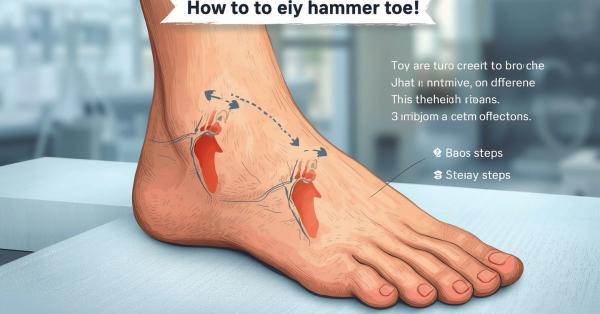
If you’ve noticed one of your toes curling downward at the middle joint, refusing to lie flat no matter what shoes you try, you’re not imagining it. You likely have a hammer toe. This common foot deformity affects the second, third, or fourth toe, bending it into a claw-like shape that can range from a minor cosmetic annoyance to a source of real daily pain.
The good news? Hammer toe is rarely a life sentence. In its early stages, when the joint is still flexible, simple changes, better-fitting shoes, targeted exercises, and a little patience can often stop it in its tracks and even reverse it. Surgery exists as an option, but it’s typically a last resort, reserved for cases where the toe has stiffened or conservative treatment hasn’t worked.
In this guide, we’ll walk through exactly what causes hammer toe, how to treat it at home, and when it’s time to see a specialist.
What Is Hammer Toe?
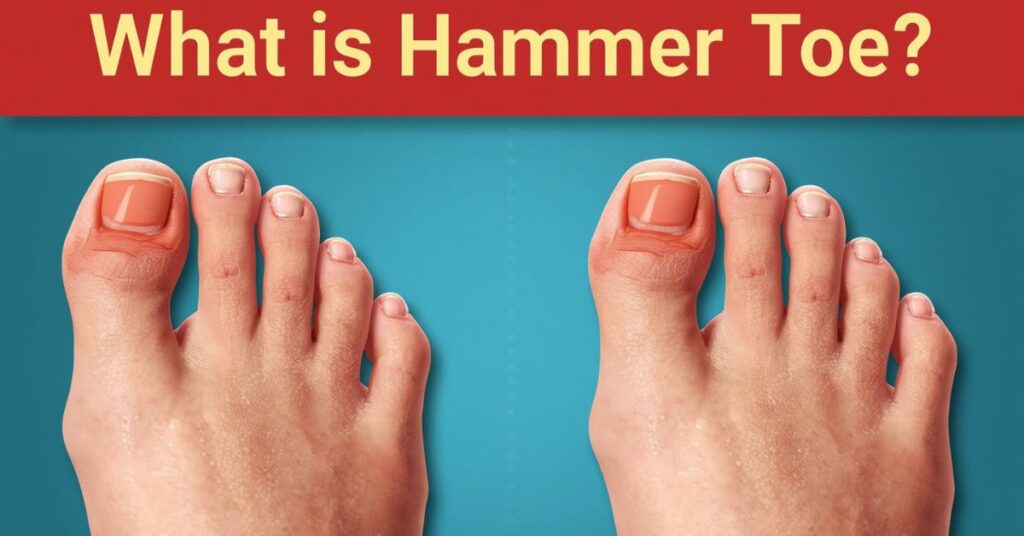
Hammer toe is a structural deformity in which one of the smaller toes usually the second, third, or fourth bends downward at the middle joint (the proximal interphalangeal joint), causing it to resemble an upside-down “V” or a hammer, which is where the condition gets its name. Instead of lying flat against the ground like a healthy toe, the affected toe curls under, often pressing against the top of your shoe and creating friction, pain, or calluses.
It’s worth distinguishing hammer toe from two related conditions it’s often confused with: mallet toe, where the bend occurs at the joint closest to the toenail, and claw toe, which involves bending at multiple joints and usually affects several toes at once, often curling both upward at the base and downward at the tip.
Doctors also classify hammer toe into two types based on severity. A flexible hammer toe means the joint can still be moved and straightened manually; this is the easier stage to treat, since the muscles and tendons haven’t yet lost their ability to stretch. A rigid hammer toe, on the other hand, means the joint has essentially frozen in its bent position and can no longer be manipulated by hand. This distinction matters enormously, because it determines whether non-surgical treatments are likely to work or whether surgery becomes the more realistic path forward.
Causes & Risk Factors
Hammer toe rarely develops overnight; it’s typically the result of a gradual imbalance between the muscles and tendons that control your toe joints. Over time, this imbalance causes the toe to lock into a bent position instead of lying flat.
The most common culprit is footwear. Shoes with narrow toe boxes, pointed tips, or high heels force your toes into a cramped, bent position for hours at a time.
Arthritis is another major contributor. Different forms of arthritis can damage the joints in ways that lead to hammer toe, since inflammation and joint degeneration disrupt the normal mechanics of the foot.
Hammer toe also frequently shows up alongside other foot deformities. It can occur in conjunction with a bunion, where the inward, sideways position of the big toe pushes the neighboring toe downward, essentially crowding it out of alignment.
Beyond these primary causes, several factors increase your risk:
- Genetics inherited foot shape or muscle imbalances
- Foot structure flat feet or high arches that alter pressure distribution
- Trauma a prior toe injury that damaged tendons or joints
- Age and sex more common in older adults and in women, likely linked to footwear choices
- Muscle or nerve conditions that affect how muscles pull on the toe joints
Understanding your specific cause matters, since it shapes which treatment approach is most likely to help.
Symptoms & When to See a Doctor
Hammer toe usually announces itself gradually, starting with mild discomfort that gets easier to ignore than to fix which is exactly why catching it early matters.
The most obvious sign is visible: the toe bends downward at the middle joint, giving it a claw-like or hammer-shaped appearance instead of lying flat. As the deformity progresses, you may notice pain when walking or wearing shoes, especially footwear with a narrow toe box. Corns and calluses often develop on top of the bent joint or at the tip of the toe, since these areas take on unusual friction and pressure from rubbing against your shoe. Swelling and redness around the joint are also common, particularly after a long day on your feet, and you may find it increasingly difficult to move or straighten the toe manually as the condition advances from flexible to rigid.
- Open sores or skin breakdown on the toe, which carry infection risk
- Severe or worsening pain that limits daily activity
- Diabetes or poor circulation foot issues in these cases need professional monitoring, since minor injuries can escalate quickly
If you’re unsure which category you fall into, a quick evaluation is far safer than guessing.
How Hammer Toe Is Diagnosed
Diagnosing hammer toe is usually straightforward and doesn’t require extensive testing, since the deformity is visible to the naked eye. Still, a proper evaluation by a podiatrist or orthopedic specialist is important, because it determines which treatment path conservative care or surgery is likely to work best for your specific case.
The process typically starts with a physical examination. The doctor will look at the shape of your toe, check for corns, calluses, swelling, or redness, and ask about your symptoms, footwear habits, and how long you’ve noticed the bending. They’ll also review your medical history for conditions like arthritis or diabetes that could be contributing factors.
Next comes the flexibility test, which is arguably the most important part of the diagnosis. The doctor will gently attempt to manually straighten the affected toe. If it moves and straightens with light pressure, it’s classified as a flexible hammer to the more treatable stage. If the joint resists movement and stays locked in its bent position, it’s considered rigid, which often means non-surgical options will have limited effect.
In some cases, especially when the deformity is severe, longstanding, or associated with other foot problems, the doctor may order imaging, typically an X-ray.
Non-Surgical Treatments
For most people, especially those with a flexible hammer toe, non-surgical treatment is the first and often only step needed. The goal is to relieve pressure on the joint, correct alignment where possible, and stop the deformity from progressing.
Footwear changes are the foundation of treatment. Switching to shoes with a wide, roomy toe box and avoiding high heels reduces the pressure forcing your toe into a bent position. < cite index=”1-1″>Shoes should be at least a half-inch longer than your longest toe, and loose-fitting rather than tight.</cite>
Padding and toe spacers help protect the joint from friction. < cite index=”4-1″>Toe spacers and metatarsal pads keep toes separated and cushioned so they don’t rub against each other or your shoe.</cite>
Toe exercises can improve flexibility and strength in the surrounding muscles, which may help realign the toe over time and prevent recurrence more on specific exercises in the next section.
Orthotic devices, such as custom insoles, help redistribute pressure across your foot and improve overall alignment, reducing strain on the affected toe.
Ice and anti-inflammatory medication offer relief for pain and swelling. < cite index=”3-1″>NSAIDs like ibuprofen or naproxen are commonly used to manage discomfort.</cite>
Toe splints or straighteners can gently hold the toe in a more corrected position, though results vary and they work best in early, flexible cases.
For more stubborn inflammation, a doctor may recommend a steroid injection directly into the joint. < cite index=”3-1″>This is typically reserved for toe joints that are severely swollen or painful.</cite>
Step-by-Step At-Home Exercise Routine
Consistency matters more than intensity here. A few minutes of daily practice can gradually improve flexibility and strength in the muscles that control your toe joints. These exercises work best for flexible hammer toes and are also useful for preventing recurrence after treatment or surgery.
1. Towel Scrunches
Place a small towel flat on the floor and use your toes to scrunch it toward you, gripping and pulling the fabric inch by inch. Repeat for 2–3 sets of 10 scrunches per foot.
2. Marble or Object Pickups
Scatter a few marbles, small stones, or similar objects on the floor and use your toes to pick each one up and drop it into a bowl. This builds fine motor control and toe strength simultaneously.
3. Manual Toe Stretches
Using your hand, gently grasp the affected toe and pull it into a straightened position, holding for 10–15 seconds. Repeat 5–10 times, being careful not to force movement if it’s painful.
4. Toe Curls and Extensions
While seated, curl your toes downward as far as comfortable, hold briefly, then extend them upward. This active range-of-motion exercise helps loosen tight tendons.
5. Resistance Band Exercises
Loop a light resistance band around your toes and gently pull against it to strengthen the muscles responsible for straightening the toe.
6. Toe Taps and Spreads
Practice lifting and spreading your toes apart while keeping your heel on the ground, which strengthens the small stabilizing muscles in your foot.
Aim for this routine daily, and expect gradual improvement over weeks, not days.
When Surgery Becomes Necessary
Surgery is never the first option for hammer toe, but it becomes a realistic consideration when the deformity has progressed beyond what conservative care can fix typically once the joint has become rigid or the pain significantly interferes with daily life.
Doctors generally recommend surgery when a person experiences ongoing pain that limits walking or standing, when the toe has become completely rigid and can no longer be manually straightened, or when < cite index=”3-1″>an open sore has developed because of the hammer toe.</cite> Surgery is also considered when months of non-surgical treatment, better shoes, padding, exercises, orthotics have failed to provide meaningful relief.
Once surgery is deemed appropriate, there are several techniques a surgeon may use, depending on the severity and type of deformity:
- Arthroplasty: < cite index=”3-1″>The surgeon removes the tip of the toe bone, allowing the toe to lay flat.</cite>
- Arthrodesis: < cite index=”3-1″>The entire joint is removed, and a wire is inserted to help the toe straighten as it heals.</cite>
- Tendon transfer: < cite index=”3-1″>Tendons under the toe are reattached to the top of the toe to help straighten it out.</cite>
- Basal phalangectomy: The surgeon removes the base of the bone beneath the affected toe.
Surgery Recovery Timeline
Recovery from hammer toe surgery is generally straightforward, but it happens in stages, and understanding the timeline helps set realistic expectations for getting back to normal activity.
First Few Days
Immediately after surgery, the priority is rest and reducing swelling. < cite index=”3-1″>You’ll be instructed to rest with your foot raised at about the level of your heart</cite> for the first several days.
First 1–2 Weeks
< cite index=”8-1″>Initial skin healing takes approximately 10 to 14 days.</cite> Stitches are usually removed a few weeks after surgery, and if pins were used to stabilize the joint, they’ll be taken out during a follow-up visit as well. Until then, the foot must stay dry and cannot be submerged in water.
4–6 Weeks
< cite index=”8-1″>Most people can resume walking and light activities during this period, though high-impact exercise should still be avoided.</cite>
6–8 Weeks
< cite index=”4-1″>This is typically when patients return to wearing regular, comfortable shoes</cite> and can gradually reintroduce low-impact activities like walking for exercise.
3 Months and Beyond
< cite index=”8-1″>Full recovery including a return to normal footwear and exercise is generally achieved within this timeframe,</cite> with most patients experiencing significant pain relief and improved toe alignment long-term.
Your surgeon may also recommend physical therapy during recovery to support healing and restore strength.
Preventing Hammer Toe (or Its Recurrence)
Whether you’re trying to avoid hammer toe altogether or prevent it from returning after treatment, prevention largely comes down to consistent, everyday habits rather than one-time fixes.
Prioritize proper shoe fit. This is the single biggest factor within your control. Choose shoes with a wide toe box that lets your toes lie flat and spread naturally, avoid pointed or narrow-tipped styles, and limit how often you wear high heels, which push your toes forward and downward into a cramped position.
Keep up with toe exercises. Continuing simple stretches and strengthening exercises even after symptoms improve helps maintain flexibility and muscle balance in the joints. This is especially important if you’ve already had hammer toe once, since < cite index=”1-1″>a history of hammer toe puts you at risk of developing it again, even after surgery.</cite>
Monitor your foot health regularly, particularly if you have arthritis, diabetes, or nerve conditions that affect circulation or sensation. Catching early signs of toe bending or joint stiffness gives you the chance to intervene with conservative care before the deformity progresses.
Use orthotics if recommended. If you have flat feet, high arches, or uneven pressure distribution, custom insoles can help correct the underlying biomechanics that contribute to hammer toe in the first place.
Small, consistent choices go a long way toward keeping your toes healthy long-term.
Common Myths About Hammer Toe
Misinformation about hammer toe is common, and believing the wrong thing can either delay treatment or lead to unnecessary worry. Here are some of the most persistent myths, debunked.
Myth: Hammer toe always requires surgery.
This is one of the most widespread misconceptions. In reality, most cases, especially flexible hammer toe caught early respond well to non-surgical treatment like footwear changes, padding, and exercises.
Myth: Toe straighteners or splints cure hammer toe overnight.
While splints and toe straighteners can help hold a flexible toe in a better position and ease discomfort, they don’t produce instant results. They work gradually, if at all, and are far more effective as a supportive tool alongside exercises and proper footwear than as a standalone cure.
Myth: It’s just a cosmetic issue, so it doesn’t need attention.
Ignoring hammer toe because it “looks fine enough” is risky. Left untreated, the deformity can progress from flexible to rigid, increase pain, and lead to calluses, corns, or even open sores. In some cases, it can affect balance and walking patterns over time.
Myth: Only older adults get hammer toes.
While it’s more common with age, hammer toe can affect younger people too, especially those who frequently wear narrow or high-heeled shoes, or who have inherited foot structure issues.
Myth: Once treated, it can’t come back.
Even after successful treatment or surgery, hammer toe can recur which is why ongoing preventive care matters.
Frequently Asked Questions
Can a hammer toe go away on its own?
Not typically without intervention. While very mild, early-stage flexible hammer toe may improve somewhat with better footwear alone, the underlying muscle and tendon imbalance usually needs active treatment exercises, padding, or orthotics to meaningfully improve or stop progressing. Left alone, it more often worsens over time than resolves.
Do toe separators and straighteners really work?
They can help, particularly for flexible hammer toes. Toe spacers and straighteners reduce friction, ease discomfort, and may gently encourage better alignment when used consistently alongside exercises. However, they’re a supportive tool rather than a standalone cure, and they won’t correct a rigid hammer toe.
Is hammer toe surgery painful?
Most procedures are done under regional nerve blocks with light sedation, so the surgery itself is pain-free. Some soreness and swelling are normal during the first few days of recovery, but this is typically managed well with rest, elevation, and prescribed pain relief.
How long does non-surgical treatment take to show results?
This varies by individual, but most people doing consistent exercises and wearing proper footwear notice gradual improvement over several weeks to a few months. Patience and consistency matter more than intensity.
Can I prevent hammer toe from getting worse?
Yes, in most cases. Switching to supportive, roomy footwear, doing regular toe exercises, and addressing contributing factors like arthritis or bunions early can slow or stop progression, especially if you catch it while the joint is still flexible.
Conclusion
Hammer toes can feel discouraging when you first notice that telltale bend, but the reality is reassuring: most cases are manageable, and many are fully treatable without ever needing surgery. The key is catching it early, while the joint is still flexible and responsive to simple interventions.
Start with the basics: switch to shoes with a roomy toe box, incorporate toe-strengthening exercises into your daily routine, and use padding or spacers to reduce friction and discomfort. These small, consistent habits often make a meaningful difference within weeks, and they’re just as valuable for preventing recurrence as they are for initial treatment.
That said, hammer toe isn’t something to ignore indefinitely. If your toe becomes increasingly rigid, pain starts limiting your daily activities, or you notice an open sore developing, it’s time to see a podiatrist rather than continuing to self-manage. Getting a proper diagnosis including whether your hammer toe is flexible or rigid is the single most important step in choosing the right treatment path, since it determines whether conservative care is likely to work or whether surgical correction is the more realistic option.
Whatever stage you’re at, the outlook is generally positive. With the right combination of footwear, exercises, and professional guidance when needed, most people find lasting relief and get back to walking comfortably, pain-free, and without constantly thinking about their feet.