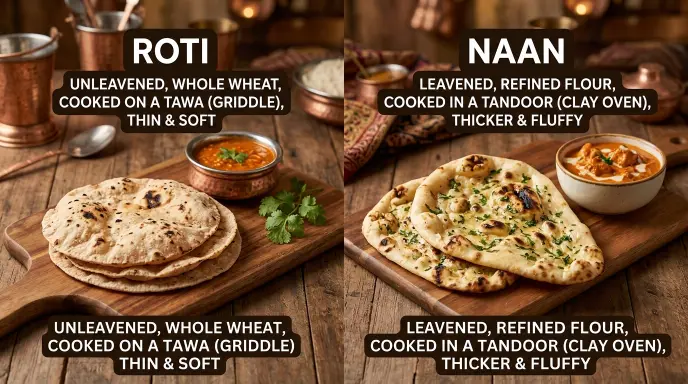
Roti and naan are both popular South Asian flatbreads, but they are made and cooked differently. Roti is usually a thin, unleavened bread made from whole-wheat atta and cooked on a tawa. Naan is generally a thicker, leavened bread made with refined flour and often yogurt or oil, traditionally cooked in a tandoor. As a result, roti is usually lighter and more wheat-forward, while naan is softer, chewier, and richer.
Key Takeaways
- Roti is typically made with whole-wheat flour and is unleavened.
- Naan is usually leavened and often made with refined flour.
- Roti is commonly cooked on a tawa, while naan is traditionally cooked in a tandoor.
- Naan is generally thicker, softer, and richer than roti.
- Plain whole-wheat roti is often the lighter everyday choice, but nutrition depends on the recipe and portion size.
- Both breads work well with curries, vegetables, lentils, and grilled foods.
What Is Roti?
Roti is a simple South Asian flatbread that has been a staple in many homes for generations. It is commonly made with whole-wheat flour, known as atta, mixed with water and sometimes salt. The dough is rolled into thin rounds and cooked on a flat pan called a tawa.
Unlike many types of bread, traditional roti does not need yeast. It is therefore considered an unleavened bread. Some rotis are also placed directly over a flame after cooking on the pan, allowing them to puff up.
Roti is commonly served with dal, vegetables, beans, chicken, meat, and other dishes with enough sauce or gravy to scoop up.
Because it is relatively simple to prepare, roti is often associated with everyday home cooking rather than being reserved for restaurant meals.
How Roti Is Made
A basic roti needs only a few ingredients:
- Whole-wheat atta
- Water
- Salt, if desired
The flour and water are mixed into a soft dough. After resting, the dough is divided into small portions, rolled thin, and cooked on a hot tawa.
The result is a thin, flexible flatbread with a mild, earthy wheat flavor.
What Is Naan?
Naan is another famous South Asian flatbread, especially popular in restaurants around the world. Compared with roti, naan is usually thicker, softer, and more elastic.
Traditional naan dough is commonly made with refined wheat flour, or maida, along with a leavening ingredient. Depending on the recipe, yogurt, milk, oil, butter, or other ingredients may also be included.
The dough is traditionally stretched or shaped by hand and cooked against the extremely hot surface of a tandoor, a clay or metal oven. This high-heat cooking creates browned spots and a slightly charred flavor.
Naan can be served plain, but restaurants often offer versions such as garlic naan, butter naan, cheese naan, and stuffed naan.
How Naan Is Made
A typical naan recipe may contain:
- Refined wheat flour
- Water or milk
- Yogurt
- Yeast, baking powder, or another leavening ingredient
- Salt
- Oil, butter, or ghee
The exact recipe varies. Some modern recipes use different flour combinations or cook naan on a skillet instead of a traditional tandoor.
Roti vs Naan: Key Differences
The easiest way to understand roti vs naan is to compare their ingredients, preparation, texture, and cooking methods.
| Feature | Roti | Naan |
|---|---|---|
| Typical flour | Whole-wheat atta | Often refined flour or a flour blend |
| Leavening | Usually none | Usually leavened |
| Thickness | Thin | Thicker |
| Texture | Soft, flexible, slightly chewy | Soft, airy, chewy |
| Traditional cooking | Tawa or direct flame | Tandoor |
| Flavor | Mild, earthy wheat flavor | Richer, sometimes slightly tangy |
| Added fat | Often little or none | Often oil, butter, or ghee |
| Common use | Everyday meals | Restaurant meals and richer dishes |
These are typical differences rather than absolute rules. South Asian bread traditions are diverse, and recipes can change from one household, region, restaurant, or chef to another.
Ingredients
The flour is one of the biggest differences.
Traditional roti commonly uses whole-wheat atta. Naan is often prepared with refined flour, although whole-wheat naan and other variations are also available.
This difference affects more than nutrition. Flour type also influences the bread’s color, structure, flavor, and texture.
Leavening
Roti is generally unleavened. It does not need yeast to become light or airy.
Naan is commonly leavened. Yeast, yogurt, baking powder, baking soda, or combinations of these ingredients can help create its characteristic soft and airy texture.
That is why naan often feels more pillowy than a typical roti.
Cooking Method
Traditional roti is cooked on a flat griddle called a tawa. Some versions are finished directly over an open flame.
Naan is traditionally associated with the tandoor. The dough is placed against the hot oven wall, where it cooks quickly and develops bubbles, browned areas, and a lightly charred surface.
However, cooking method is not an absolute dividing line. Tandoori roti exists, and naan can also be cooked in a skillet or oven at home.
Texture and Taste
Roti is usually thin and flexible. It has a mild wheat flavor and can have a slightly dry or earthy character when compared with naan.
Naan is generally thicker and softer. It can have chewy edges, airy sections, and toasted or charred spots from tandoor cooking.
Butter or garlic can make naan even richer and more flavorful.
So, if you prefer a simple wheat flavor, roti may be your favorite. If you want a soft, rich, restaurant-style bread, naan may win.
Roti vs Naan Nutrition
Nutrition is one of the biggest reasons people search for roti vs naan.
However, there is no single calorie or nutrition number that applies to every roti or naan. Size, flour, oil, butter, yogurt, toppings, and preparation methods can all change the final nutrition.
A small plain roti made mostly from whole-wheat flour can be quite different from a large restaurant naan brushed with butter.
Whole-wheat versions can provide more fiber than breads made primarily with refined flour. The USDA also recommends making at least half of your grain intake whole grains, making whole-grain choices useful within an overall balanced diet.
Which Has More Calories?
A typical restaurant naan can contain more calories than a simple roti because naan is often larger and may contain oil, butter, yogurt, or other enriching ingredients.
However, size matters. Comparing one small roti with one large naan is not an equal portion comparison.
Butter naan and garlic naan can also contain more fat and calories than plain naan.
For that reason, it is better to compare the actual serving size and ingredients rather than assuming every naan has a specific calorie count.
Which Has More Fiber?
A roti made from whole-wheat atta generally has an advantage when it comes to fiber compared with a typical refined-flour naan.
Fiber is one reason whole grains are commonly encouraged as part of a balanced eating pattern. Still, whole-wheat naan is available, so the flour listed on the menu or package matters.
If fiber is important to you, look for whole-wheat or whole-grain versions rather than judging the bread only by its name.
Is Roti Healthier Than Naan?
For an everyday meal, plain whole-wheat roti can be a lighter choice than a large, buttered restaurant naan. Its simple ingredient list and whole-wheat flour can make it a useful option when you want more whole grains and fewer added fats.
But calling naan “unhealthy” would be too simplistic.
A plain naan eaten occasionally can easily fit into a balanced diet. Likewise, roti can become more calorie-dense if it is prepared with large amounts of ghee or butter.
The better question is not simply, “Which bread is healthy?”
Instead, consider:
- What flour is used?
- How large is the serving?
- How much butter, oil, or ghee is added?
- What else are you eating with it?
- How often are you eating it?
Your overall meal matters more than the bread’s name alone.
Roti vs Naan: Which One Should You Choose?
The best choice depends on what you are eating and what you want from the meal.
Best Bread for Rich Curries
Naan is an excellent match for rich, creamy, or heavily spiced dishes. Its soft texture makes it easy to tear and use for scooping up thick sauces.
Garlic naan can be especially flavorful with dishes such as butter chicken, tikka masala, or creamy lentil dishes.
Best Bread for Everyday Meals
Roti is a natural choice for everyday meals because it is simple, versatile, and quick to pair with vegetables, lentils, beans, and meat dishes.
Its thinner texture also allows the other foods on the plate to remain the focus.
Best Choice When Watching Calories
Plain roti is often the easier choice when you are trying to control calories, especially when compared with a large buttered naan.
Still, portion size matters. One small roti is not nutritionally equivalent to a huge restaurant naan.
If you prefer naan, choosing a plain version and limiting added butter can also be a practical approach.
Roti vs Naan vs Chapati
Roti and chapati are sometimes used interchangeably, although terminology varies across regions and families.
Chapati is generally considered a type of roti. Both are commonly associated with thin, unleavened whole-wheat flatbread.
Naan is different because it is generally thicker and leavened.
In simple terms:
- Roti: A broad term for several types of South Asian flatbreads.
- Chapati: Often refers to a thin, unleavened whole-wheat roti.
- Naan: A typically leavened, thicker flatbread traditionally cooked in a tandoor.
Because South Asian food has many regional traditions, these definitions are useful guidelines rather than rigid rules.
Frequently Asked Questions
Is roti healthier than naan?
Plain whole-wheat roti is often a lighter everyday option because it is usually made with whole-wheat flour and little added fat. However, nutrition varies by recipe and serving size. A whole-wheat naan may also be a nutritious choice, while a buttered or stuffed naan can contain considerably more calories and fat.
Which has more calories, roti or naan?
A typical restaurant naan often has more calories per piece because it is larger and may contain oil, butter, yogurt, or other ingredients. However, calories vary widely. A fair comparison should consider the weight, size, recipe, and toppings of both breads.
Can I eat roti instead of naan?
Yes. Roti can replace naan with many curries, lentils, vegetables, and grilled dishes. The biggest difference will be texture and flavor. Roti is usually thinner and more wheat-forward, while naan is thicker, softer, and often richer.
Is naan made from refined flour?
Many traditional and restaurant-style naan recipes use refined wheat flour, commonly called maida. However, not every naan is made exclusively from refined flour. Some recipes use whole-wheat flour or a mixture of flours, so checking the ingredients is the best way to know.
Which is better for weight loss, roti or naan?
Plain whole-wheat roti may be easier to fit into a calorie-conscious eating pattern because it is usually smaller and contains less added fat than many restaurant naans. However, weight management depends on your overall calorie intake, portions, and eating pattern rather than one specific food.
Are roti and naan the same?
No. They are both South Asian flatbreads, but they are usually made differently. Roti is commonly unleavened and made with whole-wheat flour, while naan is generally leavened and often made with refined flour. Their cooking methods and textures also differ.
Final Verdict: Roti vs Naan
When comparing roti vs naan, neither bread is automatically the winner for every situation.
Choose roti when you want a thin, simple, whole-wheat flatbread that works well with everyday meals. Choose naan when you want something softer, thicker, chewier, and richer, especially with restaurant-style curries and creamy dishes.
For nutrition, plain whole-wheat roti often has an advantage over large or buttered naan, particularly when fiber and added fat are considerations. Still, portion size and ingredients matter.
Ultimately, the choice comes down to the meal and your preference. Roti is simple and versatile, while naan brings a soft, rich, tandoor-style experience to the table. Both can be part of a balanced diet when enjoyed in appropriate portions.