If you spend any time on TikTok, Instagram Reels, or YouTube Shorts, you have definitely seen “POV:” at the start of a video. POV is internet slang for “Point of View,” and it consistently ranks among America’s most searched texting abbreviations. But what does it actually mean, and why is it everywhere?
The abbreviation became one of the most recognizable video formats on the internet. Its meaning stays consistent, but the way creators use it ranges from comedy sketches to emotional storytelling to relatable everyday moments.
Understanding POV meaning can help you enjoy videos, read captions, and follow text conversations more easily. This guide explains what the term stands for, how people use it on each platform, what it means in different contexts, and how it compares to similar formats.
POV Meaning & Definition
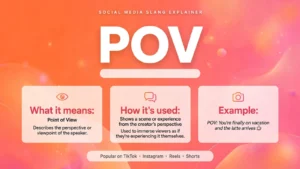
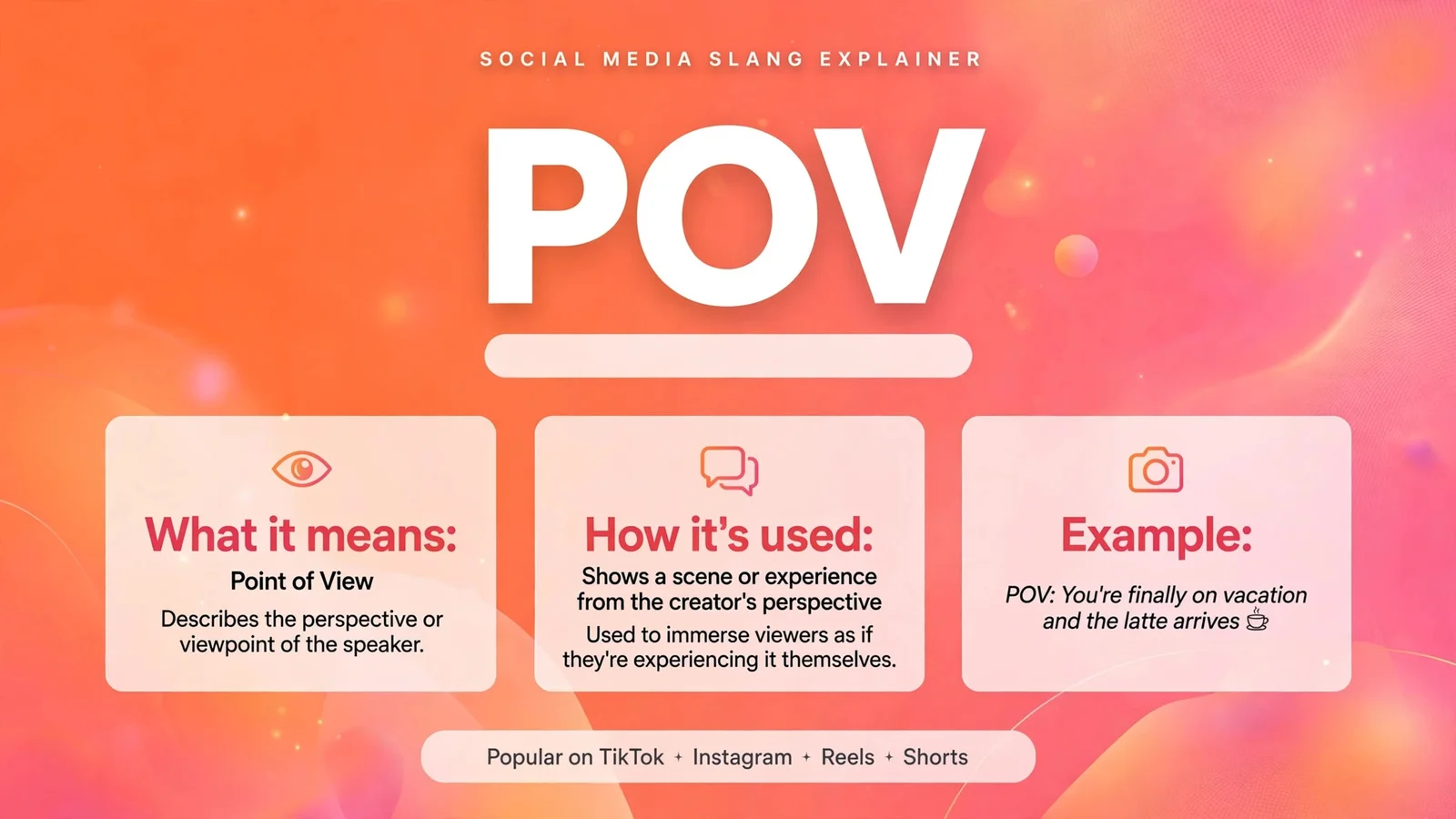
POV is an abbreviation of the phrase “Point of View.” In texting and on social media, it introduces a scenario shown from a particular person’s perspective. When a video starts with “POV:”, the creator is inviting you to imagine yourself inside that situation.
For example, “POV: You’re meeting your best friend after 5 years” — the video then shows what that emotional reunion might look and feel like from your perspective.
The format works because it pulls the viewer into the scene. Instead of watching something happen to someone else, you experience it as if it is happening to you.
In everyday online language, the term generally describes a perspective or scenario framing device, not a camera technique — although the two are related.
Background and Origin of POV
POV developed as a shortened form of “point of view,” a phrase long used in literature, film, and photography to describe a narrative perspective. The abbreviation itself is not new, but its explosion as a social media format is recent.
The phrase “point of view” has existed in storytelling for centuries. Writers and filmmakers have always thought about whose eyes the audience sees through. What changed is that short-video platforms gave ordinary creators a simple label — “POV:” — to frame their videos this way.
The format became strongly associated with TikTok, where “POV” videos became one of the platform’s defining genres. Creators used it for comedy, drama, relatable scenarios, and roleplay. Short videos, trends, sounds, and duets helped spread the format, and it is now widely recognizable internet culture.
The meaning has stayed stable. Whether in a 2021 TikTok or a 2026 text message, POV has consistently meant “Point of View.”
How POV Is Used in Chat, WhatsApp, Instagram, and TikTok
The meaning of POV usually stays the same across messaging and social media platforms, but the way people use it can vary.
In Chat and WhatsApp
In private messages, people use “POV:” to set up a shared joke or relatable scenario in words rather than video.
Example:
“POV: you just remembered you left the stove on”
The message frames a panicked, funny situation the reader can instantly picture.
On Instagram
Instagram users may use “POV” in captions, Reels, and Stories. Reels creators adopted the TikTok POV format directly, and captions often use it to frame photos humorously.
Example:
A photo of a messy desk captioned: “POV: deadline is tomorrow.”
The phrase turns an ordinary photo into a relatable joke.
On TikTok
TikTok is where POV became a cultural phenomenon. Creators use it for:
- Comedy sketches: “POV: Your mom finds your report card”
- Relatable moments: “POV: It’s Friday at 5 PM and you’re finally off work”
- Emotional storytelling: “POV: You’re saying goodbye at the airport”
- Roleplay: “POV: You’re the main character”
You may see phrases such as:
- “POV: you finally did it”
- “POV: nobody understands”
- “POV: plot twist”
- “POV: core memory unlocked”
These formats usually invite the viewer to feel like a participant rather than an observer.
The exact framing depends on the creator’s intent. A POV video might be hilarious, heartwarming, dramatic, or deeply relatable.
Common Misconceptions About POV
One major misconception is that POV videos are filmed from a first-person camera angle. While some are, most “POV” videos are filmed normally — the “point of view” refers to the scenario’s perspective, not the camera position.
Another misconception is that POV is only a TikTok thing. The format has spread to Instagram Reels, YouTube Shorts, and even text conversations. It is now general internet culture, not platform-specific slang.
Some people also assume every video labeled POV follows the format correctly. In practice, creators sometimes slap “POV:” on videos that are not really from anyone’s point of view, just to ride the trend. The label has become partly a meme in itself.
It is also important not to confuse the slang with the technical film term. In casual use, POV means a scenario format, not a cinematography technique.
Similar Terms and Alternatives
Several formats and expressions can overlap with POV, although their meanings are not exactly identical.
- “Imagine”: Used to set up hypothetical scenarios (“Imagine having a week off”).
- “Me when”: A meme format describing the poster’s reaction to situations.
- “Nobody: … Me:”: A meme format contrasting silence with the poster’s behavior.
- “That feeling when (TFW)”: Describes a relatable emotional moment.
- Roleplay (RP): Acting out a character or scenario, common in fan communities.
- “Day in my life”: A vlog format showing someone’s routine from their perspective.
For casual online content, “POV” is the most direct framing device — it immediately tells the viewer whose shoes they are in. “Me when” and “TFW” describe reactions instead of perspectives.
How to Respond When Someone Sends a “POV”
Your response should depend on the relationship and tone.
If a friend sends “POV: Monday morning” with a tired selfie, you could respond playfully:
- “Felt that”
- “So real.”
- “This is literally us.”
- “POV: accurate.”
If someone shares a POV video they made:
- “This is so good”
- “The acting”
- “I felt this in my soul.”
- “You need to make more of these.”
If the POV touches on something emotional or serious, a genuine response may be better than a joke. Match the energy of what they shared.
The key is to read the content. POV formats depend heavily on tone, context, and the scenario being portrayed.
POV vs. Similar Formats
Although POV overlaps with several content formats, there are useful differences.
| Format | Typical Meaning |
|---|---|
| POV | “Point of View” — scenario from someone’s perspective |
| “Me when” | The poster’s reaction to a situation |
| TFW | “That feeling when” — a relatable emotional moment |
| Roleplay | Acting as a character in an ongoing scenario |
| “Day in my life” | Vlog of someone’s routine |
The biggest difference is perspective. “POV” puts the viewer inside the scenario. “Me when” and “TFW” describe the poster’s own reaction from the outside. A POV video says “you are here”; a “me when” meme says “this is how I react.”
For example, “POV: You’re stuck in traffic” invites you to feel the frustration. “Me when I’m stuck in traffic” shows someone else’s frustration for you to laugh at.
FAQs About POV Meaning
1. What does POV mean on TikTok?
POV stands for “Point of View.” On TikTok, it labels videos that present a scenario from a particular person’s perspective, inviting viewers to imagine themselves in that situation.
2. What does POV mean in texting?
In texts, “POV:” introduces a relatable or funny scenario in words, like “POV: you just woke up late for work.” It frames the message as a shared experience.
3. Do POV videos have to be filmed in first person?
No. Most POV videos are filmed normally. The “point of view” refers to the scenario’s perspective — whose experience is being shown — not the camera angle.
4. Is POV only used on TikTok?
No. While TikTok popularized the format, POV is now used on Instagram Reels, YouTube Shorts, and in everyday text conversations.
Conclusion
POV is a widely used internet slang abbreviation for “Point of View.” On social media, it frames videos and scenarios from a particular person’s perspective, inviting the audience to step into the moment. You may encounter it on TikTok, Instagram Reels, YouTube Shorts, and in text messages.
The meaning depends on context. A POV video might be comedy, drama, or a relatable slice of life — but it always centers on perspective. It turned from a storytelling term into one of the internet’s most recognizable content formats.
In short, POV usually means “imagine you’re the one experiencing this.”
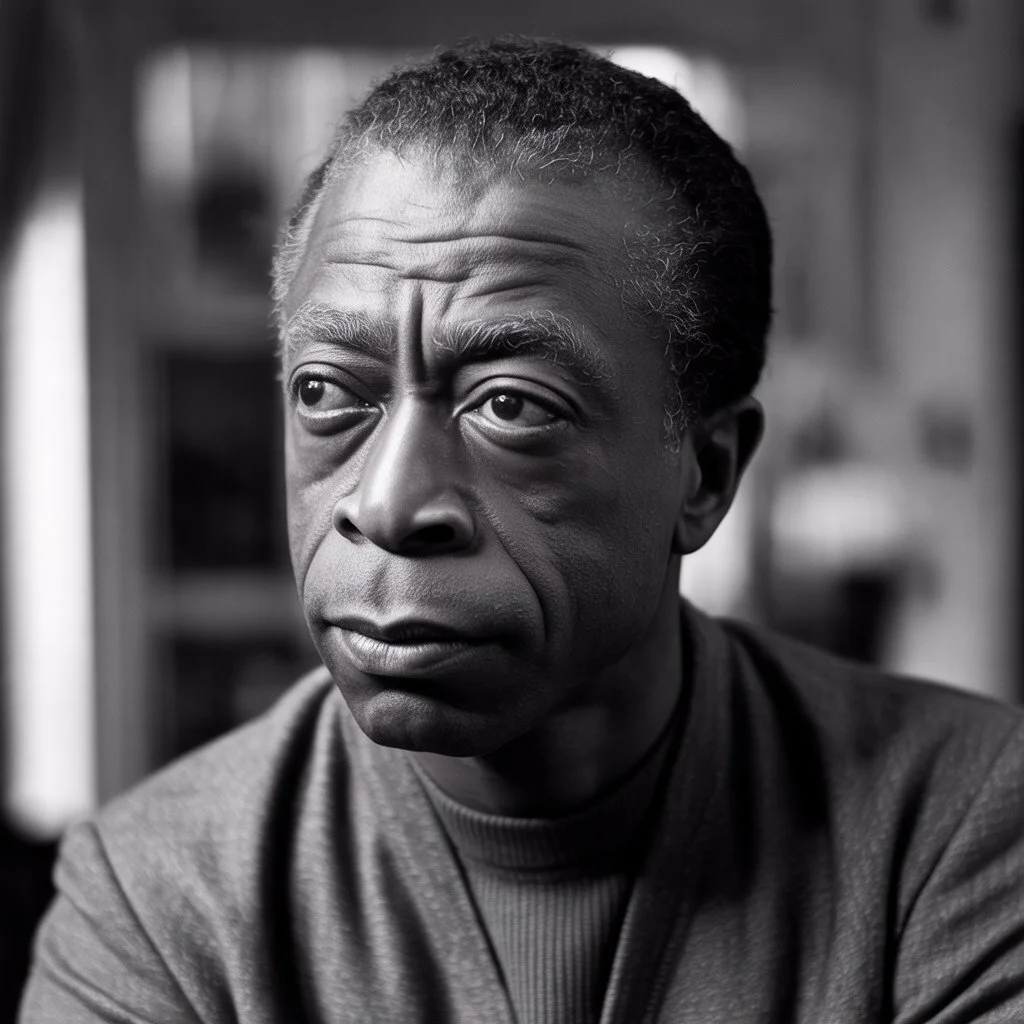
James Baldwin was a fearless American writer and activist, exploring race, identity, and justice with sharp honesty. Read inspiring literary bios on punsora.com for readers seeking truth, courage, and insight.