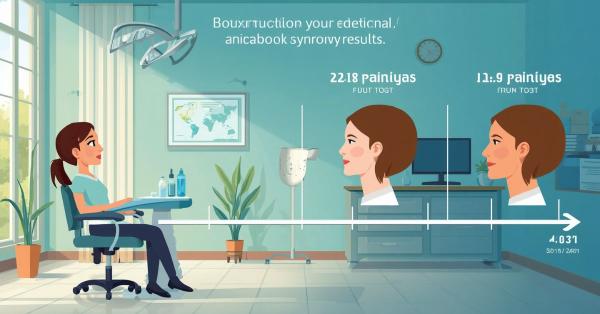
You just left your Botox appointment, checked the mirror, and… nothing. No smoother forehead, no softened lines between your brows. If you’re wondering whether something went wrong, take a breath. This is completely normal.
Botox doesn’t work the instant the needle comes out. It works on a schedule: a predictable arc of onset, peak, and gradual fade that plays out over several months. Most people notice the first subtle changes within 3 to 5 days, with full results appearing around 10 to 14 days later. Understanding that timeline is the difference between a patient who feels confident waiting it out and one who panics on day two, convinced the treatment failed.
In this guide, we’ll walk through exactly what happens day by day, why the process takes time, what affects your personal timeline, and when it’s actually worth checking in with your provider.
How Botox Actually Works (The Mechanism)
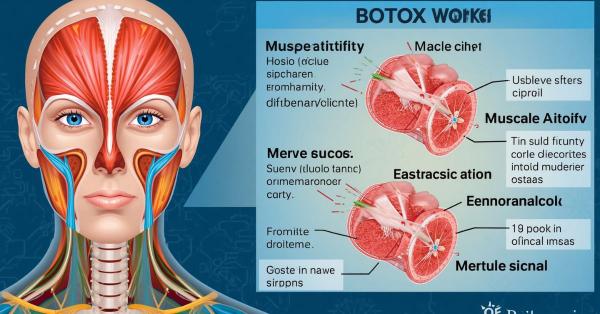
To understand why Botox takes time to show results, it helps to know what’s actually happening beneath the skin. Botox is a purified form of botulinum toxin type A. When injected into a targeted muscle, it doesn’t dissolve wrinkles directly or fill in lines the way a dermal filler does. Instead, it works on the nerve-muscle connection.
Normally, your nerves release a chemical messenger called acetylcholine, which signals your muscles to contract. Repeated contractions frowning, squinting, raising your eyebrows are what create the dynamic wrinkles Botox is designed to treat. Once injected, Botox blocks the release of acetylcholine at the neuromuscular junction, preventing that signal from reaching the muscle. Without the signal, the muscle can’t contract as forcefully, and the skin above it gradually smooths out.
This blocking process isn’t instantaneous. The toxin needs time to bind to nerve endings and take full effect, and the muscle needs time to actually relax once that signal is interrupted. That’s why results build gradually over one to two weeks rather than appearing the moment you leave the clinic.
This mechanism also explains why Botox looks different from surgery or fillers: it’s not adding or removing anything physically. It’s temporarily changing how a muscle communicates with your nervous system which is also why the effect eventually reverses as those nerve connections regenerate over the following months.
The Day-by-Day Timeline: What to Expect
Here’s how the process typically unfolds after your appointment:
Day 1 (Treatment Day): No visible change yet. You may notice mild redness, small bumps, or slight swelling at the injection sites; this is normal and usually settles within a few hours to a day.
Days 2–3: This is often when the first hints appear, though not visually. Some people notice it feels different to frown, squint, or raise their eyebrows, even before any smoothing is visible in the mirror.
Days 3–5: The earliest visible changes typically show up here, especially in areas with thinner skin and smaller muscles, like around the eyes.
Days 7–10: Noticeable smoothing becomes apparent across the treated area. Many patients feel confident at this stage that the treatment is working.
Days 10–14: This is the peak effect of the full, final result. Most providers recommend judging your outcome and deciding on a touch-up only after this point.
Weeks 3–4: Results settle into their natural-looking finish, with movement patterns adjusting to the relaxed muscle.
Months 3–4: Muscle activity gradually starts returning, and treated lines slowly begin reappearing.
The key takeaway: Botox follows a gradual curve, not a switch. Judging results too early on day 2 or 3 is the most common reason people mistakenly think their treatment “didn’t work,” when in reality it simply hadn’t reached its peak yet.
Onset Speed by Treatment Area
Not all areas of the face respond to Botox at the same rate. How quickly you see results often depends on the size and strength of the muscle being treated, as well as how thick the overlying skin is.
Crow’s feet (around the eyes): These muscles are smaller and the skin here is thinner, so this area tends to respond fastest, often showing visible softening within 3 to 4 days.
Forehead lines: The forehead muscle is broader and slightly stronger, so results here usually take a bit longer to fully show, typically 5 to 7 days for significant improvement.
Glabellar lines (the “11s” between the brows): This area generally responds within 4 to 7 days, though it can take the full two weeks to reach its peak, since these muscles are used constantly in everyday expressions like frowning.
Masseter/jawline (for jaw slimming): This is the slowest-responding area by far. Because the masseter is a large, dense muscle, visible slimming can take 2 to 4 weeks, and full results may not be apparent for a month or more.
Medical applications (migraines, TMJ, excessive sweating): These follow a different pattern than cosmetic treatment, often depending more on dosage and the underlying condition’s severity than on muscle size alone.
Factors That Affect How Fast Botox Works
While the general timeline holds true for most people, several individual factors can speed up or slow down how quickly you notice results.
Dosage: The number of units injected plays a direct role. A conservative, lighter dose tends to produce a subtler result that develops more gradually, while a standard or higher dose often shows more visible change sooner.
Muscle strength and size: Patients with naturally stronger facial muscles particularly in the forehead or between the brows may need a few extra days for the muscle to fully relax, even with an accurate injection.
Metabolism: A faster metabolism can influence how quickly your body processes the toxin, which may affect both how soon you notice onset and how long the results ultimately last.
Age and skin condition: Skin elasticity and existing muscle tone can shape how visible early changes appear, even before the muscle has fully relaxed.
Injector skill and placement: Precise, well-placed injections make a noticeable difference. An experienced injector can target the exact muscle fibers responsible for a wrinkle, leading to more predictable and often faster-appearing results.
First-time vs. repeat patient: A common myth is that first-timers always take longer to see results. In reality, onset speed depends more on the individual factors above than on treatment history though repeat patients sometimes report subtler, quicker-appearing results simply because their muscles are already partially trained to relax.
What “Working” Actually Looks Like
One of the biggest sources of confusion isn’t the timeline itself, it’s not knowing what to actually look for. Botox results aren’t always as dramatic as before-and-after photos suggest, and understanding the difference between types of wrinkles helps set realistic expectations.
Dynamic vs. static lines: Dynamic wrinkles appear only when you move your face frowning, squinting, or raising your eyebrows. These are what Botox targets directly, and they’re usually the first to soften. Static lines, the ones etched into your skin even at rest, take longer to improve and may never fully disappear with Botox alone, especially if they’ve been present for years. Deeper static lines often benefit from being paired with other treatments like fillers or skincare.
Subtle vs. dramatic change: Well-placed Botox is designed to look natural, not frozen. If you’re expecting a total transformation, the actual result is smoother movement, softer lines, a more “rested” look can feel underwhelming by comparison. This is by design; overcorrection is generally avoided by experienced injectors.
Movement first, then appearance: Many patients notice a change in how their face feels before they notice a change in how it looks. Difficulty fully raising the eyebrows or frowning as hard as before is often the earliest sign the treatment is taking hold, even if the mirror hasn’t caught up yet.
Recognizing these nuances helps you judge your results accurately instead of assuming nothing happened.
When to Be Concerned: Delayed Response
For most patients, waiting is all that’s needed but it’s normal to wonder at what point a lack of results becomes a genuine concern rather than just early timing.
What counts as normal: Botox can take up to 14 days to reach full effect, especially for first-time patients or those with stronger facial muscles. If it’s been less than a week since your treatment, there’s typically no cause for concern. The toxin is still working behind the scenes, even if nothing is visible yet.
Delayed responders: A small subset of patients are “delayed responders” and may take slightly longer than the typical two-week window to show results. This doesn’t necessarily mean anything went wrong; some bodies simply process the toxin more slowly.
True non-responders: Rarely, some patients see little to no effect at all. This affects less than 1% of the population and can happen for a few reasons, including neutralizing antibodies that develop after repeated treatments over time.
When to reach out to your provider: If you’re past the 10-to-14-day mark with no visible change at all, it’s worth scheduling a follow-up. Your provider can assess whether the muscle simply needs more time, whether a supplementary “touch-up” dose is appropriate, or whether something else is going on.
The bottom line: Patience through the first two weeks resolves most concerns. Beyond that window, checking in is a reasonable and normal next step.
How Long Botox Results Last
Once your results peak around the two-week mark, the natural next question is how long that smoother, refreshed look will actually stick around.
The average duration: For most cosmetic patients, Botox results last approximately 3 to 4 months. This isn’t a hard cutoff, it’s a gradual fade rather than results disappearing all at once. There’s no “cliff” where lines suddenly snap back overnight.
Why results fade: Botox works by blocking nerve signals to the treated muscle, but this effect is temporary by design. Over time, the nerve endings regenerate and reconnect with the muscle, allowing it to gradually regain its ability to contract. As muscle activity slowly returns, treated lines begin reappearing in the same gradual way they disappeared.
What affects how long it lasts: Several of the same factors that influence onset speed also affect duration. A faster metabolism may process the toxin more quickly, shortening results. Stronger, more frequently used muscles (like the forehead) may show fading sooner than smaller, less active ones. Dosage matters too a higher dose generally lasts longer than a conservative one.
Does it wear off faster with repeated use? This is a common myth. In reality, consistent, regularly scheduled treatments often help some patients maintain results slightly longer over time, as the treated muscles gradually train to relax. There’s no evidence that Botox becomes less effective simply from repeated use, though rare antibody development can occasionally reduce responsiveness in long-term patients.
Tips to Support Optimal, Timely Results
While you can’t speed up the biological process itself, a few simple habits before and after treatment can help you get the most predictable, effective results within the expected timeline.
Before your appointment: Avoid alcohol, ibuprofen, and aspirin for about 24 hours prior to treatment. These can thin the blood and increase the risk of bruising or swelling at injection sites, which may temporarily mask early results.
Immediately after treatment: Avoid lying down or bending over for the first few hours. Gravity can theoretically encourage the toxin to migrate slightly away from the targeted muscle, which may affect precision.
Skip strenuous exercise: Avoid intense workouts for about 24 hours after your session. Elevated blood flow and increased heart rate can potentially speed up how quickly the toxin metabolizes, which some providers believe may shorten how long results last.
Don’t massage or rub the treated area: Touching, rubbing, or applying pressure to the injection sites in the first 24 hours can cause the product to spread beyond the intended muscle, leading to uneven or unexpected results.
Stay upright and let it settle: Facial exercises like frowning or raising your eyebrows a few times in the hours after treatment are sometimes recommended by providers to help the product distribute evenly, though this isn’t universally agreed upon following your injector’s specific aftercare instructions.
Keep your follow-up appointment: A two-week check-in lets your provider assess your results at peak effect and address anything that needs a touch-up.
Common Myths About Botox Timing, Debunked
There’s a lot of misinformation floating around about how Botox works. Clearing up these myths can help you approach treatment with more accurate expectations.
Myth: You’ll see results immediately. Botox is not an instant fix. Because it works by gradually blocking nerve signals to the muscle, visible change takes days to appear and up to two weeks to fully develop. Anyone expecting a same-day transformation will be disappointed not because the treatment failed, but because that’s simply not how it works.
Myth: If it’s not working by day 3, it failed. Day 3 is actually right on schedule for early signs, not a deadline for full results. Judging your outcome this early is one of the most common reasons people wrongly assume their treatment didn’t work.
Myth: First-timers always take longer to see results. Onset speed depends more on individual factors like muscle strength, dosage, and metabolism than on treatment history. Being a first-time patient doesn’t automatically mean a slower response.
Myth: Botox makes wrinkles worse if you stop getting it. Discontinuing Botox doesn’t cause rebound wrinkles or make your skin age faster. You simply return to your natural aging progression, as if you’d never started treatment.
Myth: More units always mean faster or better results. Higher doses can influence duration and intensity, but they don’t necessarily speed up onset. Proper placement and technique matter far more than sheer volume.
Frequently Asked Questions
How long does Botox take to work on forehead lines specifically?
Forehead lines typically start showing improvement within 5 to 7 days, slightly slower than smaller areas like crow’s feet, since the forehead muscle is broader and more frequently used.
Can Botox work in 24 hours?
Not typically. While some patients report subtle sensations of stiffness within the first day or two, visible smoothing almost never appears within 24 hours. Full results take up to two weeks.
Why do I feel different before I look different?
Botox affects the nerve-muscle connection first. Many patients notice it’s harder to fully raise their eyebrows or frown as intensely before any visible change appears in the mirror; this is often the earliest sign the treatment is taking effect.
Does Dysport work faster than Botox?
Some patients and providers report that Dysport kicks in one to two days faster than Botox, though both generally reach full effect within the same 10-to-14-day window. Individual responses can vary.
What if I don’t see any results after 2 weeks?
This falls outside the typical range and is worth discussing with your provider. It may mean you’re a delayed responder, or in rare cases, a supplementary dose may be needed to reach the desired effect.
Is it normal for results to look uneven at first?
Yes. Since muscles can respond at slightly different rates, it’s common to notice one side smoothing out a day or two before the other. This usually evens out by the 10-to-14-day mark.
Conclusion
Botox is a gradual process, not an instant transformation and understanding that timeline makes all the difference between feeling confident and feeling anxious in those first two weeks. To recap: most people notice the earliest signs within 3 to 5 days, full results settle in by 10 to 14 days, and the effects typically last 3 to 4 months before muscle activity slowly returns.
Your personal timeline can shift slightly based on the treatment area, your dosage, muscle strength, metabolism, and even the specific product used. None of that variation is cause for alarm; it’s simply how the treatment naturally unfolds from person to person. The key is resisting the urge to judge your results too early. Day 2 or day 3 isn’t a verdict; it’s just the beginning of the process.
If you’re approaching the two-week mark with no visible change at all, that’s the right time to check in with your provider rather than assume something went wrong. In the vast majority of cases, patience is truly the only “trick” needed.
Every face responds a little differently, and a licensed, experienced injector can help set realistic expectations based on your specific anatomy and goals before you ever sit down for treatment. If you’re considering Botox for the first time, a consultation is the best next step to understand what timeline and results are realistic for you.

James Baldwin was a fearless American writer and activist, exploring race, identity, and justice with sharp honesty. Read inspiring literary bios on punsora.com for readers seeking truth, courage, and insight.