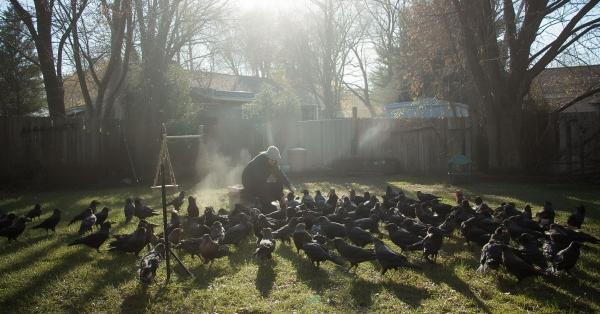
Crows don’t just tolerate humans, they study us. Research out of the University of Washington has shown that crows can recognize individual human faces and hold onto that memory for years, warning their offspring about people who’ve wronged them and rewarding those who’ve been kind. It’s part of why so many backyard birdwatchers eventually get pulled into crow-feeding: what starts as tossing out a few peanuts can turn into a genuine, years-long relationship with the same family of birds.
Unlike songbirds that flit in and out anonymously, crows notice patterns. They remember your face, your car, your walking route and they tell each other about you. Some devoted crow-feeders have even received small “gifts” left behind as a kind of thank-you.
This guide walks through exactly how to earn that trust: what to feed them, how to set up your space, and how to read the slow, deliberate way crows decide you’re safe.
Understanding Crow Behavior
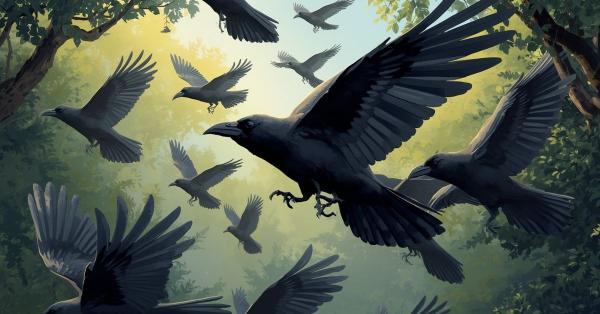
Before you put out any food, it helps to understand what you’re actually working with. Crows are members of the corvid family, alongside ravens, magpies, and jays, a group widely considered among the most intelligent birds on the planet. Studies have documented crows using tools, solving multi-step puzzles, and even fashioning hooks out of wire to retrieve food. Their brain-to-body size ratio rivals that of some primates.
Socially, crows live in tight family units. A breeding pair often keeps their offspring from previous years around as “helpers,” who assist with raising the next batch of chicks and defending territory. These family groups can expand into larger roosting flocks, especially in fall and winter, sometimes numbering in the hundreds or thousands.
Crows are also naturally cautious, a trait biologists call neophobia, or fear of new things. A new feeding spot, an unfamiliar person, or an unusual object near their territory will typically be watched from a distance before being approached, sometimes for days or weeks.
What makes crows unusual is their communication. They have distinct calls for gathering the group, sounding alarms, and notably for identifying specific threats or allies. This is how word spreads: if one crow decides you’re safe, others in the family, and sometimes the wider flock, will follow that lead.
Preparing Your Space
Where and how you set up matters just as much as what you offer. Crows won’t commit to a feeding spot unless it feels safe from every angle.
Start with sightlines. Choose an open area, a patch of lawn, a driveway, or a wide platform feeder where a crow can see in all directions while it eats. Tight corners, dense bushes, or spaces boxed in by fences make crows uneasy, since they can’t spot an approaching cat, hawk, or stranger in time to react.
Ground feeding trays or flat platform feeders work best; crows are too large and cautious for small tube feeders designed for songbirds. Place the feeding spot a reasonable distance from your house close enough for you to observe, but far enough that crows don’t feel cornered near human activity. Many people start 15–20 feet from a window or door and adjust based on how the birds respond.
Nearby high perches are essential. Trees, fences, rooflines, or power lines give crows a place to land, assess the situation, and retreat to if something feels off. Without an escape route, most crows won’t approach at all, no matter how good the food is.
Lastly, check local rules before you start a regular routine. Some cities and HOAs have ordinances around feeding wildlife, and neighbors may have opinions about a growing crow presence, so it’s worth confirming you’re in the clear.
What to Feed Crows
Crows are omnivorous and opportunistic, which makes them easy to feed but a few guidelines will keep them healthy and coming back.
Reliable favorites include unsalted peanuts (shelled or in-shell), dry or wet dog and cat food, cooked or raw eggs, corn, and small fruit scraps. Peanuts in particular are a near-universal hit and easy to toss out in small batches. Eggs are especially valuable during nesting season, when crows need extra protein to raise chicks.
Foods to avoid are just as important. Skip anything heavily salted or processed, and never offer chocolate, onions, garlic, or avocado all toxic to birds. Moldy or spoiled food should also be avoided, since it can make crows sick and, over time, teach them to distrust the feeding spot altogether.
Portion and frequency matter more than volume. A modest, consistent offering once or twice a day works far better than large, irregular dumps of food. Crows are smart enough to notice a pattern quickly, and overfeeding can lead to food waste attracting rodents or other unwanted wildlife.
Seasonal adjustments are worth planning for. During nesting season (typically spring), protein-rich food like eggs or dog food is especially welcome. In winter, when natural food sources are scarce, crows rely more heavily on supplemental feeding. Don’t forget water, a shallow dish for drinking and bathing is just as attractive to crows as food, especially in hot or dry conditions.
Building Trust Over Time
Earning a crow’s trust isn’t instant, it’s a slow, deliberate process, and knowing what to expect at each stage will keep you from giving up too early.
In the first few days, expect to be watched more than approached. Crows will often perch nearby, observe the food, and leave without touching it. This isn’t a rejection it’s assessment. Somewhere between one and six weeks of consistent feeding, a braver individual (often a younger crow) will typically make the first move.
Consistency is the single biggest factor in speeding this up. Feed at the same time, in the same spot, ideally while wearing similar clothing. Crows associate safety with predictability, so anything that varies timing, location, your appearance resets some of their caution.
How you move matters too. Slow, predictable movements read as non-threatening, while sudden gestures or fast approaches will send crows straight to a high perch. Avoid prolonged direct eye contact, which many birds interpret as a threat display. If you’re nearby while they eat, a calm, low voice can actually help crows learn to associate specific sounds with specific safe people.
Watch for early signs of progress: a crow lingering a little closer each day, feeding while keeping one eye on you rather than fleeing at the first sight of movement, or approaching sooner after you set food out. These small shifts are the real markers of trust long before a crow lets you get physically close.
Deepening the Relationship
Once a crow has decided you’re safe, the relationship doesn’t stop there; it tends to grow, both in depth and in numbers.
Crows often “test” reliability before fully committing. A bird might feed cautiously for weeks, ready to bolt at any inconsistency, before settling into a relaxed routine. Passing this test typically means sticking to your schedule even when it’s inconvenient crows notice absence as much as presence.
One of the most talked-about behaviors in crow-feeding circles is gift-giving. Crows have been documented leaving small objects, buttons, bottle caps, beads, even jewelry near feeding spots after building trust with a person. Researchers aren’t entirely certain of the motivation, but many interpret it as a reciprocal gesture, mirroring the way crows exchange food and favors within their own family groups.
Over time, you may start recognizing individual birds by subtle markings, missing feathers, or particular habits one might always arrive first, another might be more vocal. This individuality becomes more apparent the longer you feed the same group.
Perhaps most remarkable is generational trust. Crow parents have been observed introducing their offspring to trusted feeding sites, meaning the relationship you build can outlast a single bird’s lifetime and continue with its children.
Finally, trusted crows often become informal allies, mobbing hawks or cats that threaten the area, and sometimes even seeming to alert their favored humans to nearby threats or unfamiliar visitors.
Common Mistakes That Drive Crows Away
Even well-intentioned crow-feeders can undo weeks of progress with a few avoidable missteps.
Inconsistency is the most common culprit. Skipping days, changing feeding times unpredictably, or moving the feeding spot resets the trust-building process. Crows rely on pattern recognition, and irregularity reads as unreliability.
Sudden movements or rushing the process is another frequent mistake. Approaching too closely too soon, making quick gestures, or trying to hand-feed before a crow is ready will often undo weeks of careful progress. Trust has to be earned at the crow’s pace, not yours.
Misusing decoys or distress calls can backfire badly. These tools are typically designed for hunting or research, not relationship-building, and can create alarm-based associations rather than trusting crows to avoid the area instead of returning to it.
Overfeeding or relying on processed food causes its own problems. Large, irregular amounts of food can attract rodents or other unwanted wildlife, and a diet heavy in processed or salty food isn’t healthy for crows long-term.
Ignoring predator exposure is an easy oversight. A feeding spot near dense shrubs, under low cover, or within easy reach of neighborhood cats will make crows wary no matter how good the food is. If a crow or worse, a fledgling gets ambushed near your feeding site, that location may be abandoned entirely, sometimes permanently.
Troubleshooting
Even with the best setup, crow-feeding doesn’t always go smoothly right away. Here’s how to work through the most common snags.
“I’ve fed them for weeks and nothing’s happening.” This is more common than you’d think, especially in areas where crows have had negative experiences with humans before. Give it at least six to eight weeks of strict consistency before assuming it isn’t working. If there’s truly no activity, consider whether your location has enough visibility and escape routes. Crows may be avoiding the spot entirely rather than slowly warming up to it.
Competing birds or squirrels eating first. Crows are cautious enough that bolder animals often beat them to the food. This isn’t necessarily a problem because crows are watching from a distance and learning the food is safe but if it’s discouraging them from ever landing, try feeding at a time of day when competitors are less active, such as early morning.
Neighbor complaints or noise concerns. Crows can be loud, especially in larger groups. If this becomes an issue, scaling back portion size or feeding frequency can help keep the group smaller and quieter without cutting off the relationship entirely.
Crows becoming too bold. Occasionally, well-fed crows may swoop close to people or become assertive around food. This is usually solved by reintroducing a bit of distance pausing hand-proximity feeding and returning to tray or ground feeding until behavior settles.
The Payoff: Long-Term Crow Relationships
The effort of building trust with crows tends to pay off far beyond a single feeding season. Because crows are highly site-loyal and can live well over a decade, sometimes 15-20 years in the wild, the relationship you build isn’t fleeting. Many longtime crow-feeders report the same individual birds returning year after year, recognizable by markings, habits, or simply the familiar way they approach.
One of the most well-known examples is Gabi Mann, a Seattle-area crow-feeder whose story gained widespread attention after crows she’d fed for years began leaving small trinkets beads, buttons, even a pearl near her feeding tray, seemingly as gifts. Her experience, while unusually well-documented, reflects a pattern many casual crow-feeders eventually notice on a smaller scale.
Site fidelity means the crows that trust you likely won’t wander far. Family groups tend to keep the same territory across generations, so the parents you first fed may eventually bring their chicks, and those chicks may grow up feeding in the same spot decades later. In effect, you’re not building a relationship with “crows” in the abstract you’re building one with a specific, ongoing family line.
For many people, this is what makes crow-feeding different from typical backyard birding. It’s less about attracting wildlife and more about slowly becoming part of a small, intelligent community’s routine, one that remembers you, adjusts to you, and in its own way, looks out for you in return.
Conclusion
Attracting crows isn’t really about bird feeding in the traditional sense, it’s about relationship-building with animals smart enough to notice, remember, and reciprocate. Unlike scattering seed for anonymous songbirds, every step here compounds: the food you offer, the patience you show, and the consistency you maintain all feed into whether a wary, intelligent bird decides you’re worth trusting.
The process asks for more restraint than effort. Choose the right spot, offer safe food on a predictable schedule, and then step back and let the crows set the pace. Progress will likely be slow and easy to miss at first a bird lingering a little longer, watching a little less warily but those small shifts are the real signal that it’s working.
What you get in return is rare: a years-long relationship with wild animals who recognize your face, teach their own offspring to trust you, and occasionally leave behind a small token of thanks. Few backyard hobbies offer that kind of ongoing, mutual awareness.
If you’re just starting out, don’t overthink it. Put out a handful of unsalted peanuts in an open, safe spot at the same time each day, add a shallow dish of water, and give it time. The crows are already watching it’s just a matter of showing them, consistently, that you’re worth watching back.

James Baldwin was a fearless American writer and activist, exploring race, identity, and justice with sharp honesty. Read inspiring literary bios on punsora.com for readers seeking truth, courage, and insight.