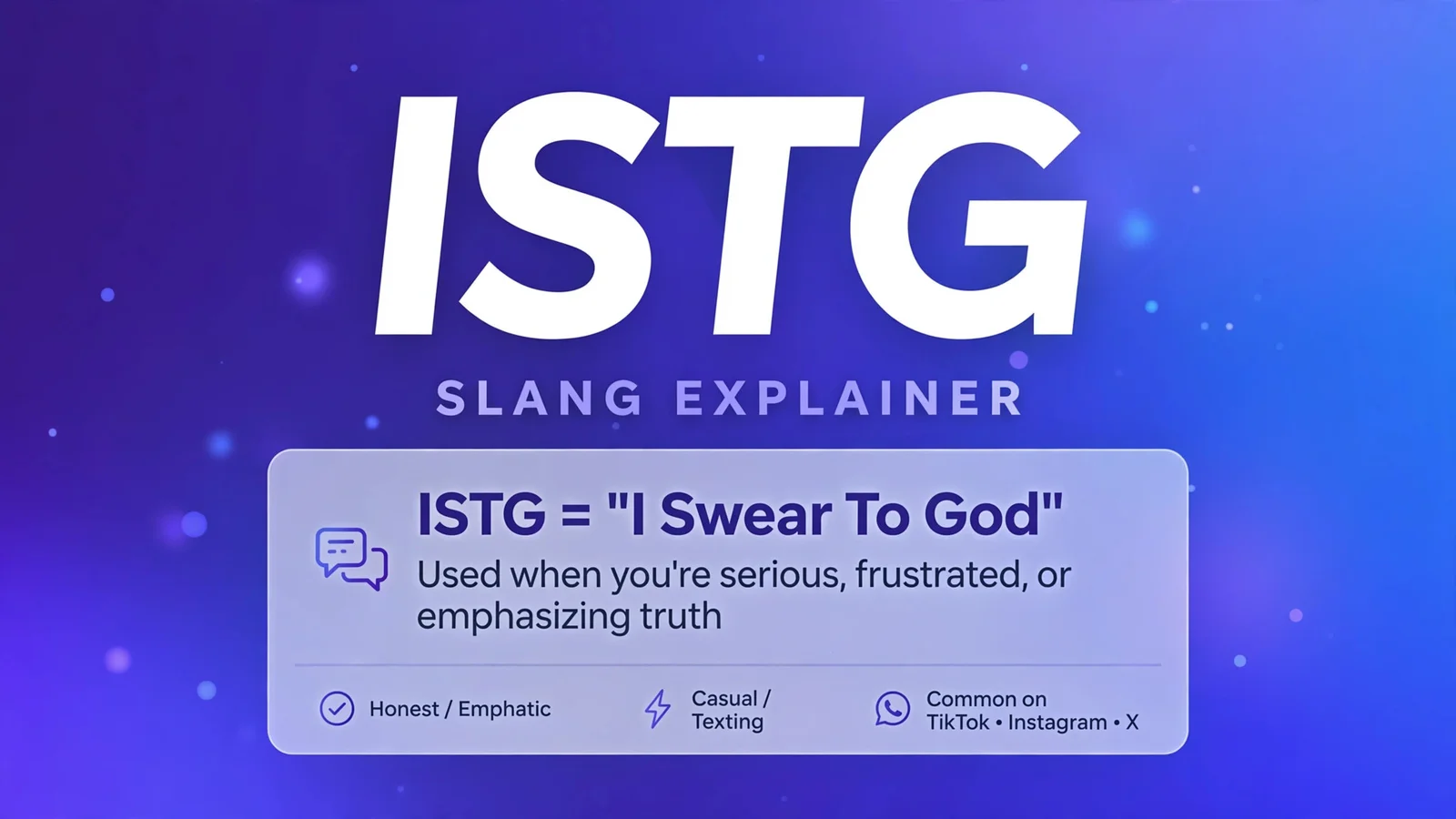
If you have seen someone write “ISTG” in a text message, TikTok comment, or Snapchat chat, you may wonder what the letters actually mean. ISTG is internet slang for “I Swear To God,” and it is one of the most searched texting abbreviations in America. People use it to emphasize that they are telling the truth or to show strong emotion about something.
The abbreviation became popular across texting and social media because it packs a strong promise into just four letters. Its meaning stays fairly consistent, but the tone can range from completely serious to playful exaggeration depending on the conversation.
Understanding ISTG meaning can help you read texts, comments, memes, and captions more easily. This guide explains what the term stands for, how people use it in different situations, what it means on each platform, and how it compares to similar expressions.
ISTG Meaning & Definition
ISTG is an abbreviation of the phrase “I Swear To God.” In texting and online slang, people use it to emphasize sincerity, make a promise, or express strong feelings such as frustration, excitement, or disbelief.
For example, if your friend texts you, “ISTG that concert was the best night of my life,” they mean they sincerely promise it was amazing — they are not exaggerating.
The phrase works like raising your right hand and making a vow. It tells the reader: “I really mean this.”
In everyday online language, the term generally does not carry a religious meaning for most users. It is casual internet vocabulary used for emphasis, similar to saying “I promise” or “seriously.”
Background and Origin of ISTG
ISTG developed as a shortened form of “I Swear To God,” following the common internet habit of compressing longer phrases into quick abbreviations. Similar shortenings appear throughout texting culture, where speed and brevity matter.
The phrase “I swear to God” itself is much older than the internet — people have used it in spoken English for generations to emphasize honesty. The abbreviated form emerged with text messaging and early chat platforms, where typing the full phrase felt too slow.
The term became strongly associated with casual digital conversations, especially among younger users on platforms like Snapchat, TikTok, Instagram, and X. Short videos, memes, comments, and captions helped spread it, and it is now widely recognizable slang.
The meaning has stayed stable over time. Unlike some slang that drifts, ISTG has consistently meant “I Swear To God” since it first appeared online.
How ISTG Is Used in Chat, WhatsApp, Instagram, and TikTok
The meaning of ISTG usually stays the same across messaging and social media platforms, but the way people use it can vary.
In Chat and WhatsApp
In private messages, people use “ISTG” to convince someone they are telling the truth or to vent strong feelings.
Example:
“I didn’t eat your leftovers.”
“ISTG it wasn’t me!”
The speaker is emphasizing their honesty because they might not be believed otherwise.
On Instagram
Instagram users may use “ISTG” in captions, comments, Stories, or Reels. It often appears alongside strong opinions, funny complaints, or dramatic reactions.
Example:
“ISTG this filter makes everyone look like a celebrity.”
The phrase adds dramatic emphasis to an ordinary statement.
On TikTok
TikTok has helped make “ISTG” especially recognizable. Creators use it in video captions and on-screen text to exaggerate reactions for comedic effect.
You may see phrases such as:
- “ISTG I’m done”
- “ISTG this is so real”
- “ISTG I can’t”
- “ISTG why is this so accurate”
These expressions usually signal strong emotion played up for humor.
The exact tone depends on the surrounding content. A person may use the term to make a genuine promise, vent frustration, or joke with friends.
Common Misconceptions About ISTG
One major misconception is that ISTG is always a religious statement. In everyday texting, most people use it as casual emphasis without any religious intent. It functions more like “I promise” than a literal oath.
Another misconception is that every person who types “ISTG” is being completely serious. Often, the term is used playfully or dramatically. Someone writing “ISTG I’m going to cry” about a funny video is exaggerating for humor, not making a solemn vow.
Some people also assume ISTG is rude or offensive. It is not inherently rude, but because it references God, some people prefer not to use it in front of older family members or in formal settings. Context and audience matter.
It is also important not to confuse the slang with a formal promise. ISTG is casual emphasis, not a legal or serious oath.
Similar Terms and Alternatives
Several words and expressions can overlap with ISTG, although their meanings are not exactly identical.
- I promise: A direct promise without slang.
- Seriously: Used to emphasize truth or strong feeling.
- No cap: Slang meaning “no lie” or “for real.”
- On God (ONG): Very similar slang, also used for emphasis and sincerity.
- Fr (for real): Short slang used to confirm honesty.
- Deadass: Stronger slang emphasizing seriousness.
- Wallahi: Used in some communities with a similar “I swear” function.
For casual online conversations, “ISTG” and “ONG” are nearly interchangeable. Still, the two should not automatically be treated as identical because “ONG” is more strongly tied to specific youth subcultures.
How to Respond When Someone Says “ISTG”
Your response should depend on the relationship and tone.
If a friend says, “ISTG this is the funniest thing I’ve ever seen,” you could respond playfully:
- “Okay okay, I believe you!”
- “ISTG you’re so dramatic”
- “Now I have to see it.”
- “Calm down, it’s just a video.”
If someone says ISTG to convince you of something serious:
- “I believe you, no need to swear.”
- “Alright, I trust you.”
- “Why wouldn’t I believe you?”
If the person seems genuinely upset, a calm and supportive response may be better. You can acknowledge their feelings instead of focusing on the slang.
The key is to read the conversation. Slang depends heavily on tone, relationship, emojis, and surrounding messages.
ISTG vs. Similar Words
Although ISTG overlaps with several terms, there are useful differences.
| Term | Typical Meaning |
|---|---|
| ISTG | “I Swear To God” — emphasis, promise, strong emotion |
| ONG | “On God” — very similar emphasis, youth slang |
| No cap | “No lie” — confirming honesty |
| Fr | “For real” — agreeing or confirming |
| I promise | A straightforward, non-slang promise |
| Seriously | Emphasis without any oath-like tone |
The biggest difference is style. “ISTG” carries the weight of a sworn statement, even when used jokingly. “Fr” and “no cap” are lighter confirmations. In a serious conversation, “I promise” sounds more sincere than any slang version.
For example, saying “ISTG I’ll be there” sounds more dramatic than “I’ll be there, fr.” The first feels like a vow; the second feels like casual confirmation.
FAQs About ISTG Meaning
1. What does ISTG mean in texting?
ISTG stands for “I Swear To God.” People use it to emphasize that they are telling the truth or to express strong emotion.
2. Is ISTG a bad word?
Not really. It is casual slang, not a swear word. However, because it mentions God, some people avoid using it in formal settings or around people who might find it disrespectful.
3. What is the difference between ISTG and ONG?
Both are used for emphasis and sincerity. ISTG means “I Swear To God,” while ONG means “On God.” They are nearly interchangeable in casual conversation.
4. Can I use ISTG at work or school?
It is best to avoid slang like ISTG in professional or academic messages. Use “I promise” or “seriously” instead in formal settings.
Conclusion
ISTG is a popular internet slang abbreviation for “I Swear To God.” In most online conversations, it adds emphasis, shows sincerity, or expresses strong feelings like frustration or excitement. You may encounter it in texts, WhatsApp messages, Instagram comments, TikTok captions, and memes.
The meaning depends on context and tone. Someone typing ISTG might be making a genuine promise, venting dramatically, or just joking with friends. It is casual internet vocabulary — powerful in the right conversation, but best left out of formal messages.
In short, ISTG usually means someone really, really means what they just said.

John Updike was an American novelist, poet, and critic, famed for Rabbit series, suburban insight, elegant prose, literary awards, and lasting influence on modern fiction, cultural social psychological realism punsora.com