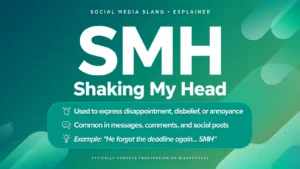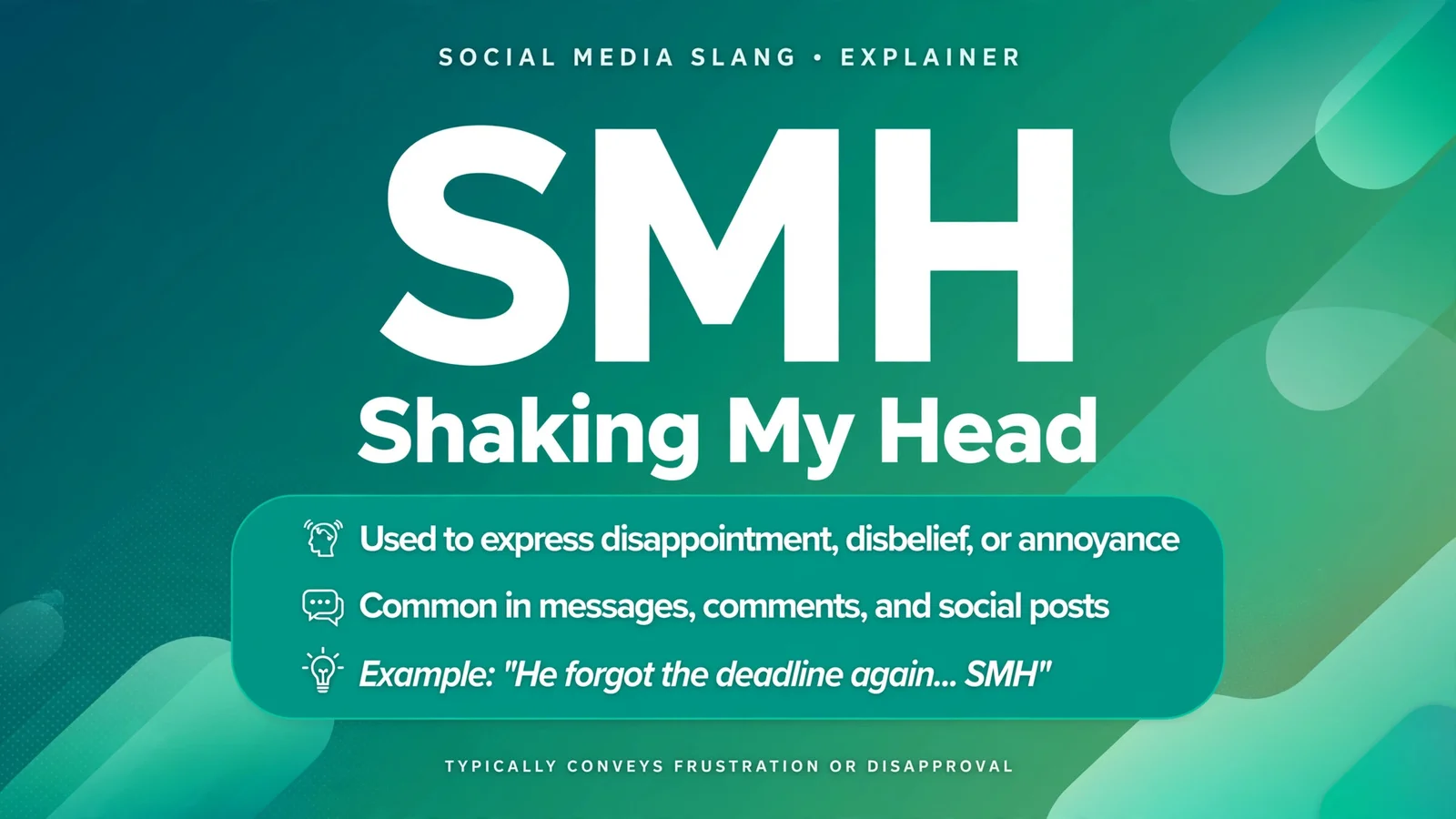
If you have seen someone reply with just “SMH” to a text, comment, or video, you may wonder what those three letters mean. SMH is internet slang for “Shaking My Head,” and it consistently ranks among America’s most searched texting abbreviations. People type it as a quick reaction when they see or hear something disappointing, silly, or unbelievable.
The abbreviation became popular across texting and social media because it captures an entire physical reaction — the slow head shake of disbelief — in three keystrokes. Its meaning stays consistent, but the tone can range from lighthearted teasing to genuine frustration.
Understanding SMH meaning can help you read texts, comments, memes, and captions more easily. This guide explains what the term stands for, how people use it in different situations, what it means on each platform, and how it compares to similar reactions.
SMH Meaning & Definition
SMH is an abbreviation of the phrase “Shaking My Head.” In texting and online slang, people use it to react to something disappointing, foolish, frustrating, or hard to believe.
For example, if someone tells you they locked their keys inside their car — again — you might reply “SMH.” It says “I can’t believe that happened” without needing a full sentence.
The phrase describes the physical gesture of shaking your head slowly from side to side, which people do when they are disappointed or exasperated. Typing SMH performs that same gesture in text form.
In everyday online language, the term is generally a mild reaction, not an aggressive one. It is closer to a sigh than a shout.
Background and Origin of SMH
SMH developed as a shortened form of “shaking my head,” following the common internet habit of compressing physical reactions into quick abbreviations. Similar reaction-shortenings appear throughout texting culture, where users want to respond instantly.
The abbreviation emerged with early internet chat rooms and forums, where users needed fast ways to express reactions without typing full sentences. It spread through text messaging and became one of the most durable pieces of internet slang.
The term became strongly associated with reaction culture on social media, especially on X (Twitter), TikTok, Instagram, and in comment sections everywhere. Short videos, memes, quote-tweets, and viral posts helped cement it as the default typed reaction to disappointing news.
The meaning has stayed remarkably stable. Unlike some slang that drifts or fades, SMH has meant “Shaking My Head” for well over a decade and shows no signs of disappearing.
How SMH Is Used in Chat, WhatsApp, Instagram, and TikTok
The meaning of SMH usually stays the same across messaging and social media platforms, but the way people use it can vary.
In Chat and WhatsApp
In private messages, friends use “SMH” as a quick reaction to bad decisions, silly mistakes, or unbelievable stories.
Example:
“I just failed the test I didn’t study for.”
“SMH. I told you to study”
The speaker is expressing disappointed amusement — they saw it coming.
On Instagram
Instagram users may use “SMH” in comments, captions, Stories, or Reels. It often appears as a reaction to drama, questionable behavior, or relatable fails.
Example:
A video of someone dropping their phone in a pool, captioned: “SMH at myself.”
The phrase can be self-directed, showing the person is laughing at their own mistake.
On TikTok
TikTok has helped make “SMH” especially recognizable. Creators use it in video captions and on-screen text to react to cringe moments, bad takes, or disappointing plot twists.
You may see phrases such as:
- “SMH my head” (a playful, redundant version)
- “SMDH” (a stronger version: “shaking my damn head”)
- “Big SMH energy”
- “SMH in disbelief”
These expressions usually signal disappointed humor rather than real anger.
The exact tone depends on the surrounding content. A person may use the term to tease a friend, react to news, or joke about themselves.
Common Misconceptions About SMH
One major misconception is that SMH is always rude or aggressive. In everyday texting, it is usually a mild, almost affectionate reaction. Friends SMH at each other constantly without any real hostility.
Another misconception is that SMH always expresses anger. Often, it expresses amused disbelief. Someone replying “SMH” to a funny fail video is laughing, not furious.
Some people also assume SMH can only be used about other people. That is not true. People frequently use it about themselves — “SMH, I can’t believe I did that” — as a form of self-deprecating humor.
It is also important not to confuse the slang with formal disapproval. SMH is a casual reaction, not a serious condemnation.
Similar Terms and Alternatives
Several words and expressions can overlap with SMH, although their meanings are not exactly identical.
- SMDH: “Shaking My Damn Head” — a stronger, more emphatic version.
- Facepalm: The gesture of covering your face with your hand in embarrassment or disbelief.
- Cringe: Describes something embarrassing or awkward to watch.
- Bruh: A versatile reaction expressing disbelief or disappointment.
- Unbelievable: The full-word version of the same sentiment.
- I can’t: Short for “I can’t believe this” or “I can’t deal with this.”
- Yikes: A quick reaction to something awkward or bad.
For casual online conversations, “SMH” is milder than “SMDH” and less dramatic than “facepalm.” Still, the terms overlap heavily, and people often use them interchangeably.
How to Respond When Someone Says “SMH”
Your response should depend on the relationship and tone.
If a friend replies “SMH” to your story, you could respond playfully:
- “I know, I know”
- “Don’t SMH me!”
- “It seemed like a good idea at the time.”
- “Okay, fair.”
If someone says SMH about something in the news or a third person:
- “Right??”
- “Honestly, same.”
- “I can’t believe it either.”
- “Big SMH energy indeed.”
If the person seems genuinely upset rather than joking, a calmer response may be better. You can acknowledge their frustration instead of treating it as a joke.
The key is to read the conversation. Slang depends heavily on tone, relationship, emojis, and surrounding messages.
SMH vs. Similar Words
Although SMH overlaps with several terms, there are useful differences.
| Term | Typical Meaning |
|---|---|
| SMH | “Shaking My Head” — mild disappointed reaction |
| SMDH | “Shaking My Damn Head” — stronger, more frustrated version |
| Facepalm | Physical gesture of embarrassed disbelief |
| Cringe | Something awkward or embarrassing to witness |
| Bruh | Versatile reaction of disbelief |
| Yikes | Quick reaction to something bad or awkward |
The biggest difference is intensity. “SMH” is the mildest of the group — a sigh in text form. “SMDH” adds frustration, “facepalm” adds embarrassment, and “cringe” focuses on secondhand awkwardness.
For example, replying “SMH” to a friend’s silly mistake is gentle teasing. Replying “SMDH” to the same message suggests you are actually annoyed. The extra letter changes the temperature.
FAQs About SMH Meaning
1. What does SMH mean in texting?
SMH stands for “Shaking My Head.” People use it as a quick reaction to something disappointing, silly, or unbelievable.
2. Is SMH rude?
Usually not. It is a mild reaction that friends use with each other playfully. It can sound judgmental in a serious context, so read the tone before using it with people you don’t know well.
3. What does “SMH my head” mean?
It is a humorous, redundant version of SMH — literally “shaking my head my head.” People say it for comedic emphasis, similar to saying “ATM machine.”
4. What is the difference between SMH and SMDH?
SMDH stands for “Shaking My Damn Head” and is a stronger, more frustrated version of SMH. Use SMH for mild reactions and SMDH when you are genuinely annoyed.
Conclusion
SMH is a widely used internet slang abbreviation for “Shaking My Head.” In most online conversations, it is a quick, mild reaction to something disappointing, silly, or hard to believe. You may encounter it in texts, WhatsApp messages, Instagram comments, TikTok captions, and reply threads everywhere.
The meaning depends on context and tone. Someone typing SMH might be gently teasing a friend, laughing at themselves, or expressing real frustration. It is casual internet vocabulary — the typed equivalent of a slow, disappointed head shake.
In short, SMH usually means “I can’t believe that just happened.”

James Baldwin was a fearless American writer and activist, exploring race, identity, and justice with sharp honesty. Read inspiring literary bios on punsora.com for readers seeking truth, courage, and insight.